Tip: Compression Socks

I recently had some long haul flights (10+ hours) and decided to try out compression socks.  My ankles and feet often get swollen after long flights.  I don’t follow the tips to avoid that as much as I should, like skipping alcohol and anything salty.  I really like that glass of wine before a long flight, it helps me fall asleep!

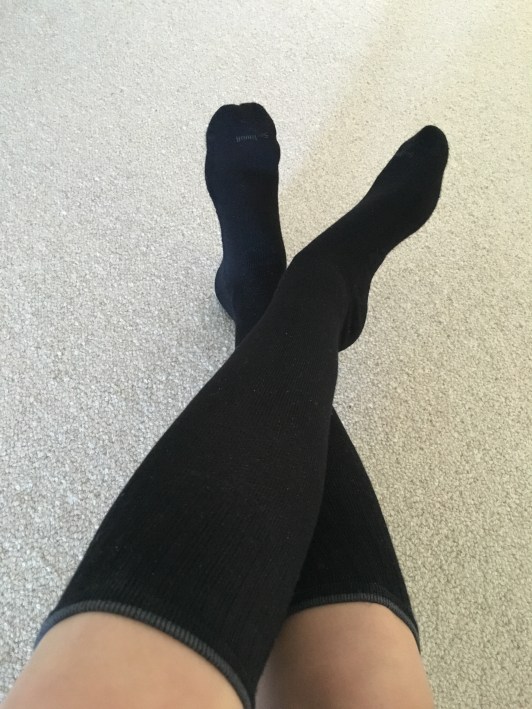
Compression socks come in lots of different colors and patterns now, and some are “sleeves” that are footless.  From the reviews I read, the ones with feet are the best if you experience swelling feet (which I do).  I opted for these plain black ones.  Rather than pick an outfit that goes with knee-high socks, I took mine in my carry on and just pulled them on for the flight after I was all settled in my seat.
img_1835

(I actually pulled them on under my pant legs.)  I could feel them squeezing my calves but not so tight that it was uncomfortable or even that noticeable.  They aren’t too thick or warm.  I slipped my shoes on over them when I needed to get up or use the restroom.

So how did they work?  I give them a B+.  I wore them on a 14 hour flight with no swelling afterwards – but I had a lay flat seat.  The true test was on a 10 hour flight where I had an economy seat with limited recline, and still chose to partake in wine and salted peanuts.  My feet were a tiny bit swollen after that flight – definitely better than I’ve experienced in the past though, and it went away quickly.

I’m happy with my purchase and will definitely continue to use them.
Tip: Travel Reading

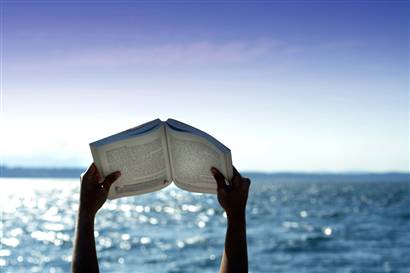
I love to combine two of my favorite things – reading and travel.  While I sometimes read non-fiction books about the place I’ll be visiting before the trip, I like to bring fiction set in the destination when I’m traveling.  I find that it adds to my enjoyment of both the book and the travel.  When the characters are walking in the same places I am, I can feel a greater connection to the story and also get a feel for the culture or history of the place I am visiting.

vacation reading

Personally I prefer contemporary fiction if I can find it, but like historical fiction too.  For example, I have read Nick Hornsby’s About A Boy and Philippa Gregory’s The Other Boleyn Girl in London, Dan Brown’s Angels & Demons in Rome, Terry McMillan’s How Stella Got Her Groove Back in Jamaica, and Kaui Hart Hemmings’ The Descendants in Hawaii.

Memoirs are also a great option; they give you a feel for the customs of a location and what it would be like to live there.  I enjoyed Sarah Turnbull’s Almost French: Love and a New Life in Paris and Adam Gopnik’s Paris to the Moon, both about the experience of a foreigner moving to Paris and adapting to their culture.  When visiting Buenos Aires I read about a woman who moved there and took up tango dancing.

One of my favorite travel experiences involved a memoir set in Anguilla.  I read A Trip to the Beach: Living on Island Time in the Caribbean by Bob and Melinda Blanchard, the story of an American couple who moved to Anguilla and opened a restaurant.  I learned about the Anguilla culture and customs from the story, and then we decided to have dinner at the Blanchard’s restaurant while we were on the island.  We got to meet Bob Blanchard who was at the restaurant that night, had a wonderful meal there, and brought home their cookbook as a souvenir.

IMG_2504
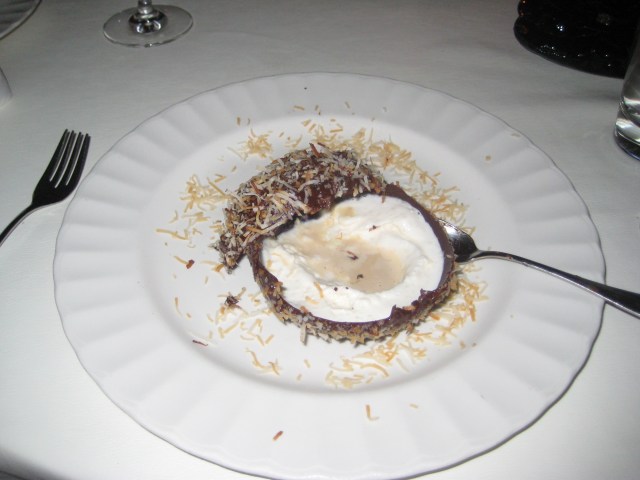
the cracked coconut dessert at Blanchard’s Table – YUM

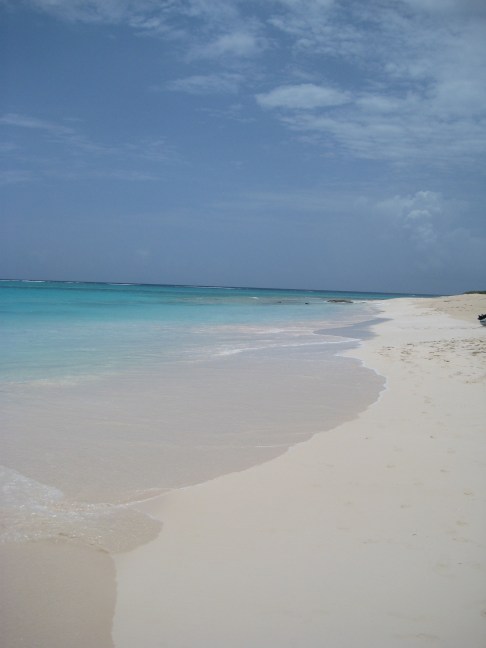
Any time I look at the cookbook or try a recipe (the cracked coconut dessert starts with water balloons dipped in chocolate!), I am transported back to the beautiful beaches of Anguilla.

IMG_2472
Anguilla


And if I had never picked up that memoir, I may not have gone to the restaurant and had the wonderful evening that my family and I all so fondly remember.

Finding books

How do I find books set in specific locations?  Some travel guide books will include book suggestions.  Barnes and Noble’s website allows you to search by geographical location.  Goodreads often has booklists for locations.  I also refer to Nancy Pearl’s Book Lust To Go which gives book recommendations for over 120 destinations.

You don’t have to actually go anywhere to enjoy travel reading.  It’s great for armchair travelers too.

“No Man Is An Island; Every Book Is A World.” ― Gabrielle Zevin, The Storied Life of A. J. Fikry

Tip: Avoid the Lines in Paris

We visited Paris in July and I couldn’t believe how long the lines were at the popular attractions, sometimes over 3 hours long.  Fortunately there are ways to avoid many of the lines.  Spend your spare time sipping a beverage in a sidewalk café or sampling macarons instead.

[Note: In addition to the suggestions I list below, you can book guided 3rd party “skip the line” tours to all of these sites – but it will be significantly more expensive.  This may be worth it in some instances.  You will find many options on Viator and TripAdvisor.  We went this route for the Eiffel Tower and the Louvre, and were very happy with our experiences.  See my previous post for more information.]

Paris Museum Pass

The Paris Museum Pass is good at over 50 museums and monuments, including the Louvre, Musée D’Orsay, Arc de Triomphe, Notre Dame, Sainte-Chapelle, the Conciergerie, Versailles (main palace only included), and Napoleon’s Tomb.  The pass allows you to skip the ticket purchase line at most of the included attractions (e.g. not at Notre Dame).

  • The pass is available for 2, 4, or 6 consecutive days, which starts on the first day you use it.  I found it to be economical even if you were not going to any of the attractions some of the days of your visit.
  • Some sites will have a security line that you will still have to wait in (e.g. Versailles).
  • You can buy the pass online and have it mailed to you, or at the airport, or various locations around Paris.  You can also buy the pass at any of the included attractions, even if you do not plan to use it at that time.  For example, we bought ours at one of the smaller museums that was close to our hotel to avoid a line at one of the more popular locations, and didn’t activate the pass until a couple days later.  We just walked in, bought the pass, and left.
  • Many museums and monuments are free for visitors under 18, so we did not buy the pass for our children.  Some locations will require you to stop and pick up a free ticket for your child – the only place we had to do that was the Musée de L’Armée.

The Eiffel Tower

The Eiffel Tower is one of the attractions that can have a line hours long, especially in the summer months.  There are a few different ways to skip it:

  1. Buy your ticket online.  You have to be quick if you’re planning to go during busy travel times.  Tickets go on sale at 8:30am Paris time, approximately 90 days in advance.  You will need to be online immediately when they’re released in order to get them.
  2. Climb the stairs.  You can climb the 700 steps to the second floor.  It’s less expensive and a much shorter line.
  3. Book a behind the scenes tour for an additional approximately 18€ per person.  This tour takes you to the bunker and engine room.  It ends on the 2nd floor, so if you want to go to the summit you would need to buy a ticket from the 2nd floor ticket counter at the end of the tour.
2015-07-06 22.12.38
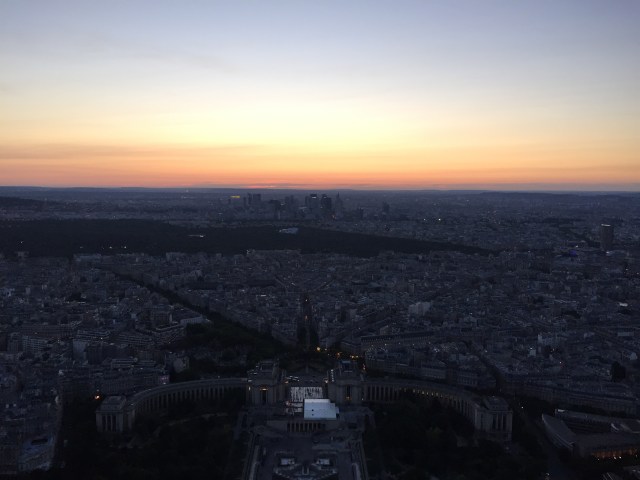
view from the Eiffel Tower at sunset


Versailles

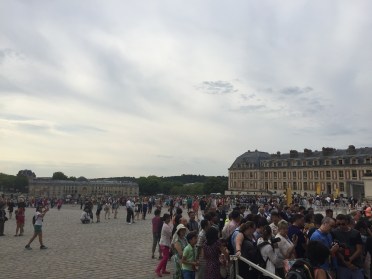
We arrived at Versailles before they opened and there were hundreds of people already in line and the courtyard quickly filled with people.  See this page for the busiest times to visit.

2015-07-05 09.33.12
lines forming before the palace opened
  • Avoid Tuesdays (when the Louvre is closed) and weekends if you can, those are the busiest days.
  • Buy your tickets in advance online or get the Paris Museum Pass (described above).  You still have to wait in the security line but can skip the ticket buying line.
  • Versailles recommends the following route on busy days:
    The interior of the Palace: at 9am
    Gardens and park: 10am to noon
    Trianon palaces and Marie-Antoinette’s hamlet: noon to 4:30pm
  • Book a guided tour for 7€ per person.  This allows you to go in a separate entrance with no line.  We took the tour of the Private Apartments of the Kings and it was excellent.  The palace was so crowded and it was really nice to see some other rooms with a small group of people and a guide.  You can then visit the main palace rooms on your own after the tour, without waiting in line.  The tour went on sale 3 months in advance at 9:30am.

The Louvre

The Louvre is closed Tuesday.  The museum gets very busy, and you’ll often fight the crowds getting in but also while touring the museum.

  • Avoid Mondays (when Versailles is closed).  The museum is free the first Sunday of the month from October to March, so will be crowded then.
  • The museum is open late Wednesdays and Fridays and is often less crowded at that time.
  • Buy your tickets in advance online or get the Paris Museum Pass (described above).
  • The pyramid entrance line is usually the longest.  Try one of the other entrances instead (e.g. from the mall underneath).
2015-07-06 13.11.09
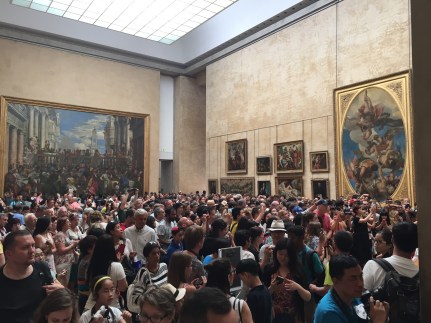
the mob in front of the Mona Lisa


The Catacombes

While not as popular as the above attractions, I had to list the Catacombes because it is the one place that we tried to see and didn’t because the line was 3 hours long.  There’s not much I will stand and wait 3 hours for.  I am determined to go there on our next visit but to plan ahead this time!

  • Their website recommends visiting on Tuesday, Wednesday, Thursday and Friday after 3 pm to avoid too long of a wait.
  • Buy your tickets online.  They can be purchased 6 months in advance.  Note that you must get the audioguide when you buy your ticket online, and there is also a 10€ per ticket reservation fee.


Bon voyage!

Tip: Track Your Luggage

If you’ve ever dealt with missing luggage when traveling, you know how frustrating it can be! I’m surprised with current technology and the revenue airlines are generating from baggage fees that there hasn’t been more advancement in airline luggage tracking.

lost-luggage

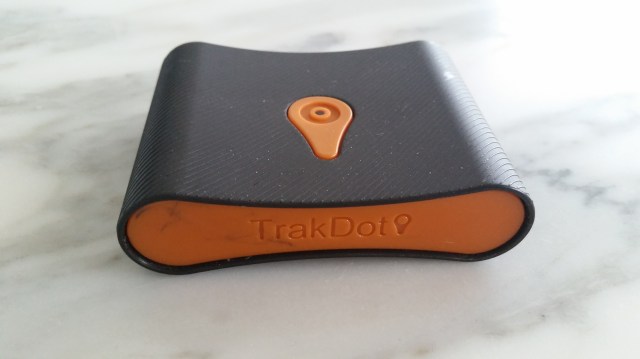
A few years ago we discovered these luggage tracking devices from Trakdot.

trakdot
TrakDot device

You put the tracker in your suitcase, and then it uses cellular networks to notify you (via text or email) when your suitcase arrives at an airport. Fortunately most of the time your luggage will be where you expect it to be, and it just gives you that added peace of mind from when your plane lands until you have your bag from the luggage carousel.

lost luggage

But it is most helpful when your luggage is lost or delayed. We recently flew from Miami to Seattle connecting through Denver. Our suitcases did not arrive with us in Seattle. The airline had no idea where our bags were – but we knew they were in Denver because Trakdot had notified us. The following afternoon I called to check with the airline on the status, and they said they still had no idea where our bags were. Fortunately Trakdot had texted us 2 hours earlier that the bags had arrived in Seattle. I looked up the flight number for a flight on that airline arriving from Denver to Seattle at around that time – and was able to tell the airline what flight number the bags came in on. They sent someone to check and sure enough found our bags!

I think in most instances the airline will eventually find your luggage and get them to you, but Trakdot can help make that quicker and also give you reassurance while you wait. We did have one time years ago that a set of checked golf clubs was never found, and I wonder if the outcome would have been different if we’d had one of these trackers in the bag?

Tip: Planning Your Days

Planning a trip where you have a lot of sites to see or activities you want to do?  Many attractions will be closed certain days of the week or have shortened/extended hours on others.  There are often best days or best times of the day to visit.  (For example the Louvre is closed Tuesdays, but very busy on Mondays because that is the day Versailles is closed.)

How do you keep track and plan accordingly?

Choose what you want to see

When I’m planning a trip, I usually start a document where I list places I want to visit.  I record in the document notes on the various sites and tours, for example their days and hours of operation, the admission fee, the best days to visit, and whether they can be booked in advance.  I’ve found that often travel planning websites have outdated information, so I gather details directly from the attraction’s or tour company’s website.  I prefer to type the list because it takes up less space on a sheet of paper and I know I can easily print it and take it with me when I go.  (And then it’s easy to share with friends or refer back to later!)

Plan what day to do each activity

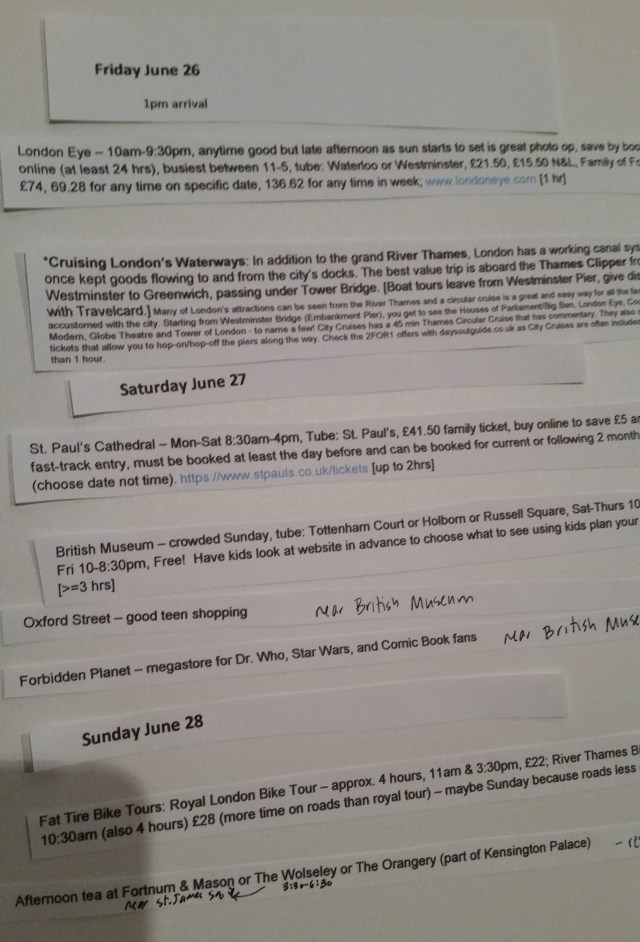
To plan my days, I print out my list of attractions and cut the page into strips, with each attraction on its own slip of paper. I then make a heading for each day of my trip and arrange the strips under those headings.  I can play around so my days aren’t too full, arrange attractions that are close to one another on the same day, and make sure I don’t miss seeing something because it is closed on the day I try to go there.

planning image (2)

The final product

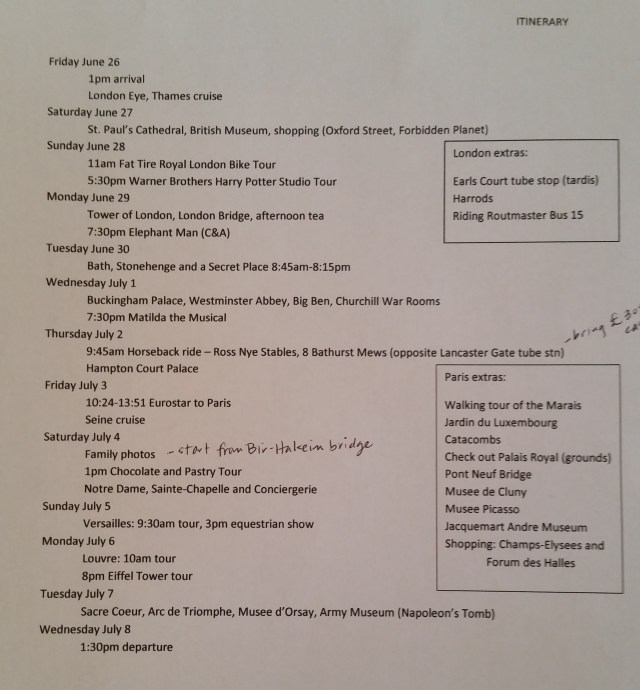
Once I had everything laid out the way I wanted, I took a photo, and then created an itinerary that I could take with me on the trip.

itinerary

I don’t view this as a set in stone itinerary, but rather a general outline of what I would like to do.  I don’t pack a full day’s worth of activities in my schedule (especially when traveling with kids), leaving plenty of time for breaks (gelato anyone?) and impromptu stops.  For this trip I also listed “extras” to the side – some more stops I thought we might like if we had time.  If we don’t actually feel like going to one of the attractions on our itinerary when that day rolls around, that’s fine.  But this way we know that we can IF WE WANT TO hit all these places that seemed important to us when planning the trip.