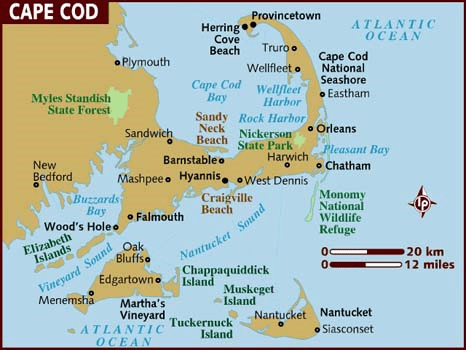
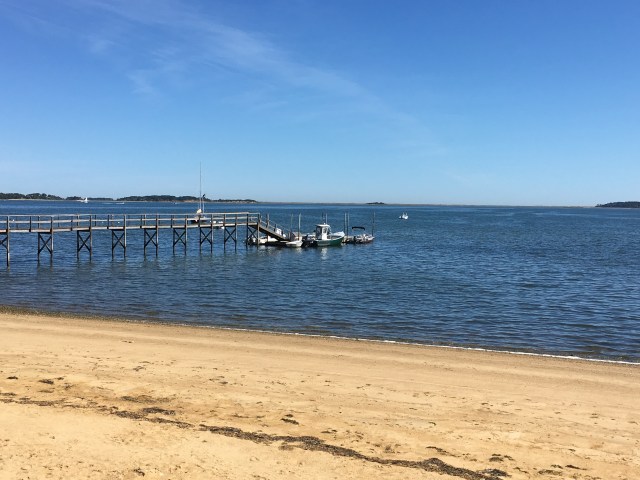
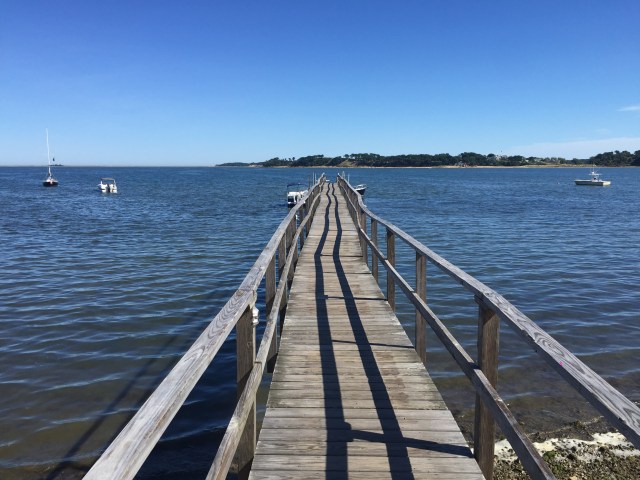
I have gotten behind in my posts! In my last post I described our day in Boston before heading out to Cape Cod, and now I am finally adding the post about the Cape portion of our trip. We took a car from Boston and stayed in a hotel in Harwich, which is in the “elbow” of the Cape, looking out over Pleasant Bay.
It was fall, so not warm enough to go in the water, but still a pretty spot to be in.
Pleasant Bay
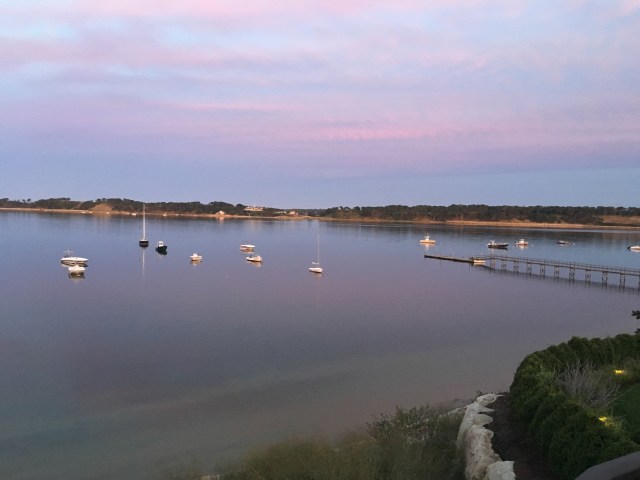
The sunsets at night were gorgeous.
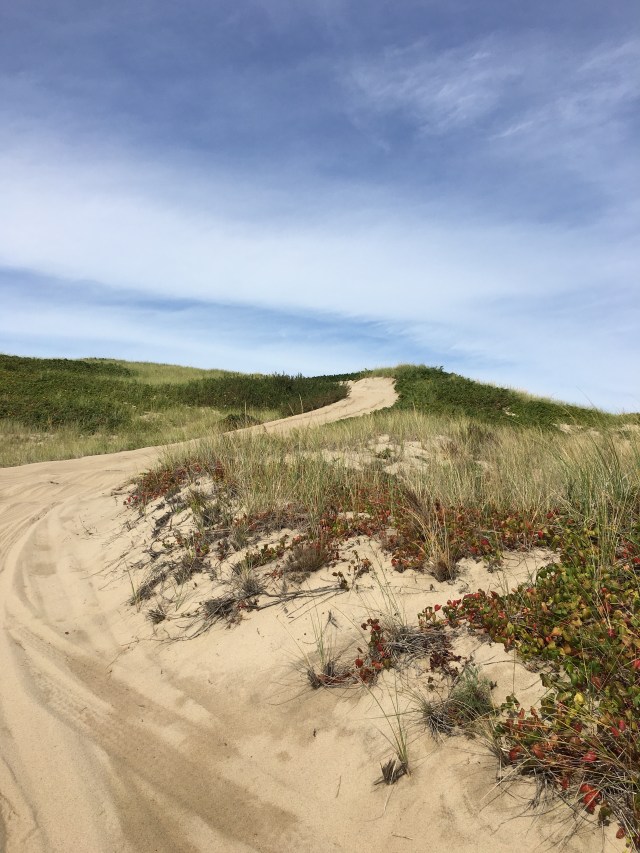
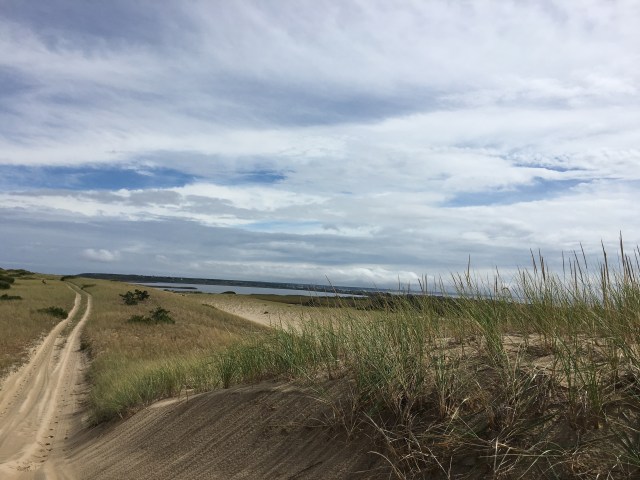
One day we went on a dune tour out of Provincetown. The tours run from April to November and take you through a part of the Cape Cod National Seashore Park that is closed to the public. We rode through the dunes in Suburbans while our guide described the history of the area and pointed out the “dune shacks” where famous artists and writers have spent time.
(Anyone else getting the Pina Colada song in their head? “…in the dunes of the Cape, I’m the love that you’ve looked for, write to me and escape…” )
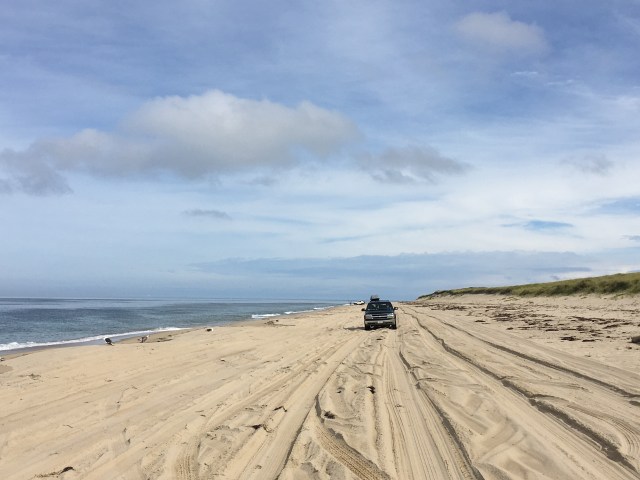
After driving through the dunes we rode along the beach and stopped for a glass of wine. We put our feet in the sand while seals swam by – we even saw a shark go past. I wasn’t quick enough to catch it on camera.
driving on the beach
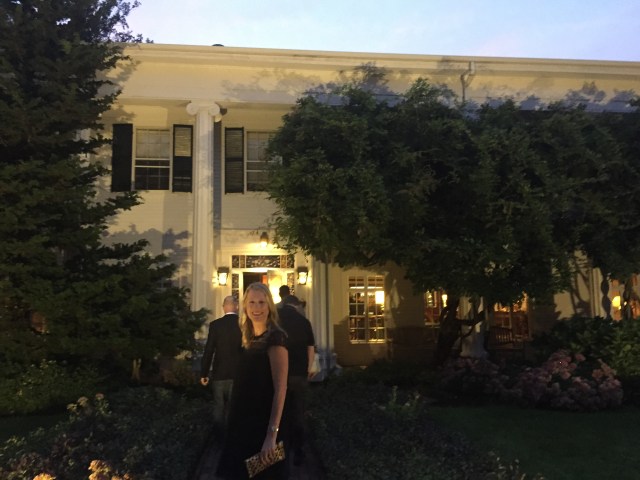
We had dinner at the Captain Linnell House, which is a restored mansion that a ship captain built for his wife in 1840. It is a charming setting.
Captain Linnell House
Another day we went on a whale watching outing, again out of Provincetown. We thought it would be a nice afternoon out on the water even if we didn’t see many whales – but were blown away by the number of humpback whales we saw, and how close they were to the boat.
We have been on some whale watch trips in other parts of the country (Hawaii, Alaska) where you wait and wait for a whale to surface, and have to look quickly to spot them in the distance or you miss them. On this trip the whales floated along the surface of the water while feeding, and you got amazing views of their full length, even the baleen in their mouths. It was spectacular.
humpback whale feeding – you can see the baleen!
I know the comments by the people around us are a little distracting in this video, but I left them in so you could hear the sounds of the whales:
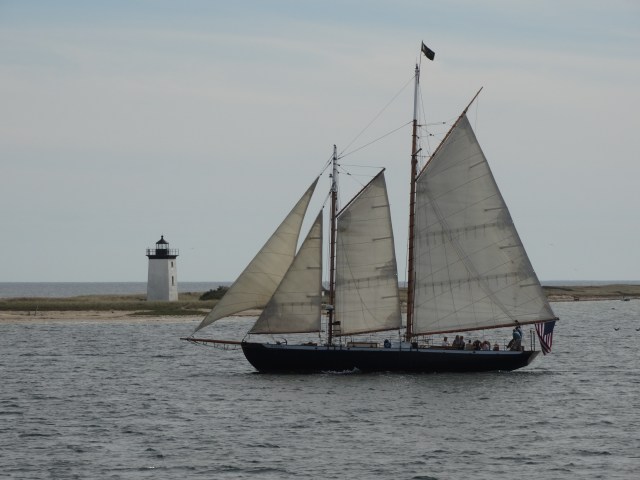
The return trip to harbor was pretty too.
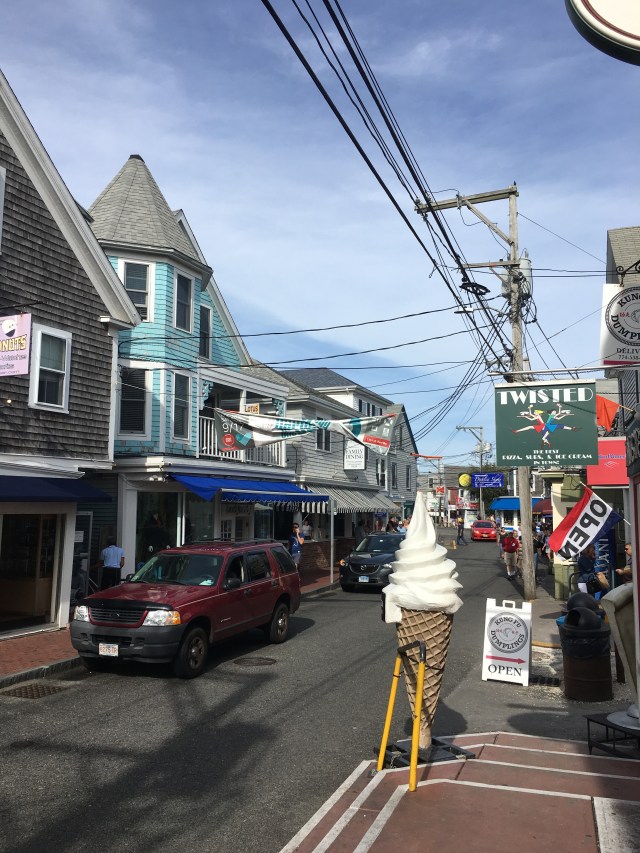
Provincetown itself is fun to walk around. There are shops and restaurants all along Commercial Street which runs parallel to the harbor, with many good spots for a bite to eat or a drink overlooking the water.
Commercial Street in Provincetown
We learned two interesting things about Provincetown that we didn’t know before: (1) it is one of the most popular LGBT vacation spots in the country/world and (2) the pilgrims actually landed in Provincetown first and 5 weeks later decided to settle in Plymouth instead.
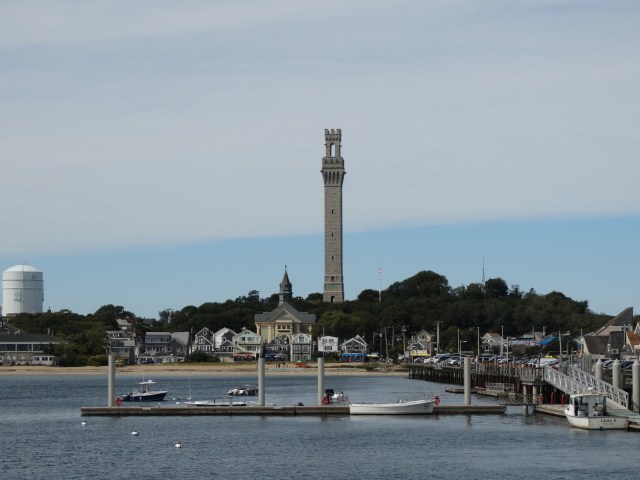
Provincetown Harbor and the Pilgrim MonumentProvincetown War Memorial with the Pilgrim Monument in the background
The Pilgrim Monument was built in the early 1900’s and commemorates the landing of the Mayflower in Provincetown. It was built to resemble a tower in Siena Italy, for no reason other than that the person who won the design contest liked that tower. We didn’t do it, but visitors can climb the 252 foot granite tower.
Scenery, seafood, wildlife, and history – we enjoyed all of this in Cape Cod.
I’m sorry Amsterdam – I had the completely wrong impression of you. I had heard about the Red Light District and drug cafés, and was expecting someplace seedy. I was surprised by what a charming, pretty, and clean city Amsterdam is.
The first thing we learned on the way from the airport to the hotel is that Amsterdam was built below sea level, and the iconic windmills that can been seen all around Holland were at one time used to drain water from the land. With modern technology, they are now mostly for decoration.
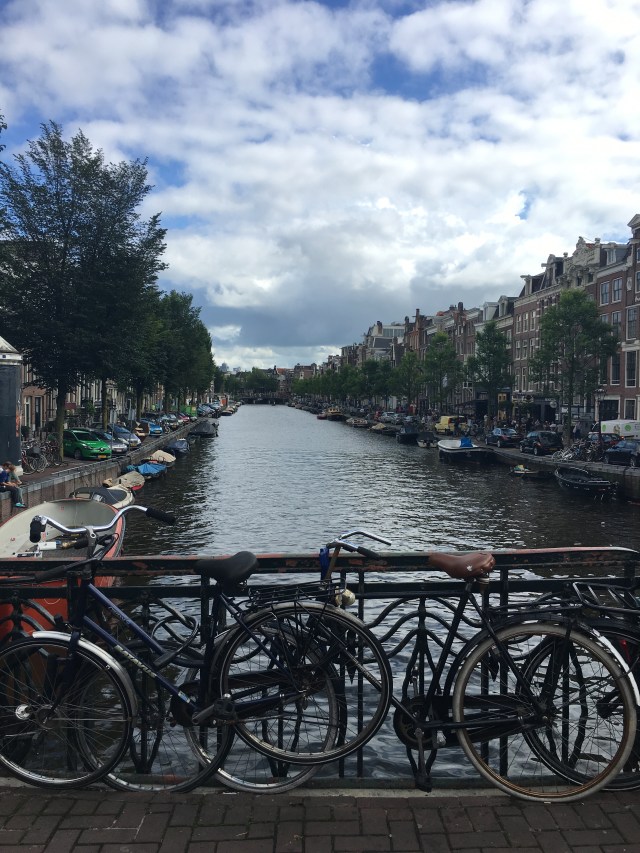
The second surprising thing to me was all the bikes. There are more bikes in Amsterdam than people (yes, seriously) and it is their primary mode of transportation. I saw women in heels, pregnant women, and people on their phones riding bikes, even couples holding hands while riding next to each other. You really have to pay attention when walking around because the bike lanes are connected to the sidewalks and you can easily get run over if you aren’t paying attention.
bike parking
I was in Amsterdam for a soccer program for my daughter, so our first night there we attended an Ajax match at Amsterdam ArenA. Amsterdam loves soccer and their team, and it was fun to be a part of that. We went back a couple of days later for a guided tour of the stadium (which you can book in advance), and got to go on the field, in the press room, and in the locker rooms. Soccer fans will enjoy this.
On days that my daughter was in soccer training I had free time to explore on my own and was able to visit some of Amsterdam’s wonderful museums.
The Rijksmuseum houses Dutch art arranged chronologically from 1700 to 2000, including paintings by Rembrandt and Vermeer. Rembrandt’s Night Watch is the most famous work at the museum (and thus usually has a crowd of people around it). I bought my ticket online the night before so I was able to skip the ticket line when I got to the museum. You do not have to specify entrance time or date – the ticket is valid for 12 months from the purchase date. I was glad I arrived fairly early because by noon the museum was getting crowded.
Rembrandt’s Night Watch
In addition to the paintings, I really liked some of the Golden Age artifacts in the museum, such as the 17th century doll houses. These houses were so elaborate they were just as expensive as a regular sized house.
All of the pieces in the house were built to scale using the same materials as the regular size item they were modeled after, and ordered from actual artisans.
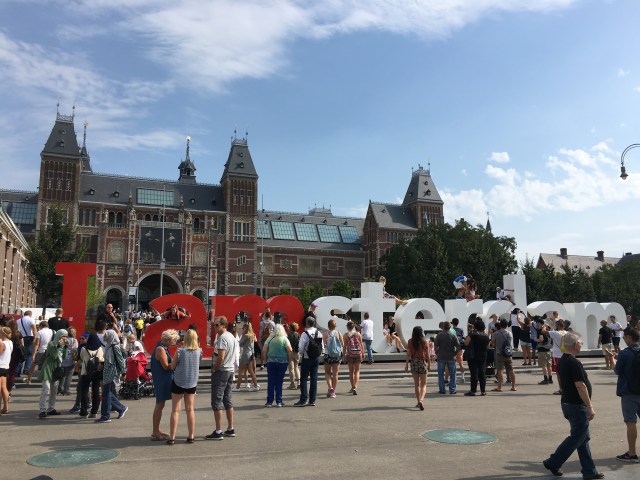
Behind the Rijksmuseum you will find the famous I Amsterdam letters, a popular photo spot. So popular in fact that you can’t take a picture without a bunch of strangers in it.
Also in the Museumplein area is the Van Gogh Museum, which I really enjoyed. Again I bought my ticket online the day before so that I could avoid the line – which was long. For this museum you do need to choose a specific date and time, and you can enter up to 30 minutes after your reservation time. I bought the audio tour and was really glad I did. One of the things I really appreciated about this museum is that they have information from Van Gogh’s letters to his brother describing meaning and what he was trying to show in specific paintings. So often when I hear information at a museum about symbolism in a painting, I wonder how they could possibly know that hundreds of years after the artist’s death with no record of whether that is what they actually intended. He painted a dog in the scene to symbolize communism…Really?? Maybe the artist just liked dogs and wasn’t trying to make a political statement! Sorry, no photos are allowed in the Van Gogh Museum so I have none to share…
No photos were also allowed at the Anne Frank Museum. In this museum you walk through the actual rooms that Anne Frank’s family and four other Jews hid in for over 2 years during the Second World War. The rooms are empty now but there’s still an eeriness to the experience. Starting in spring 2016 admission up until 3:30pm every day is by online ticket only. After 3:30pm you can get in line to purchase a ticket at the museum, but the line can be really long (I read 2-3 hours long) – so it is definitely a good idea to buy tickets in advance. Tickets go on sale 2 months before. They also have an option to buy admission with a 30 minute introductory program, and that goes on sale 2 weeks in advance. This is the option we went with because admission-only tickets were already sold out when we looked. The introductory program was very good so in the end I was glad that we went with this option.
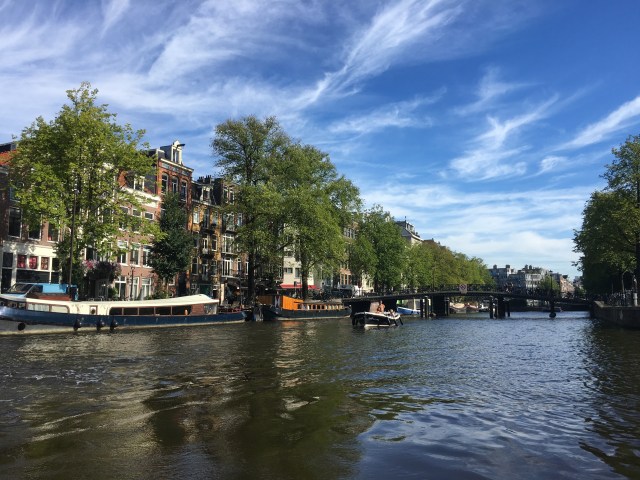
Amsterdam is a very walkable city. I loved all the canals and the historic canal houses.
The Museum Willet-Holthuysen lets you see the inside one of these historic homes and what it was like in the 19th century. The wealthy couple who lived in this mansion in the late 1800s left the home to the city of Amsterdam on the condition that it be turned into a museum named after them. The house, which is in the eastern canal ring, has much of its original furnishings and décor.
gentleman’s parlorFrench style garden at the back of the canal house
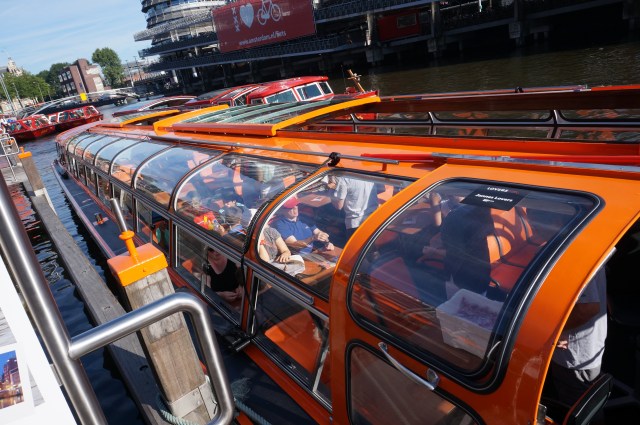
Taking a canal cruise is a great way to see the canal district. We opted for a 1 hour daytime cruise, but there are plenty of other options. As we went through the canals we listened to commentary about the different buildings and areas we were passing.
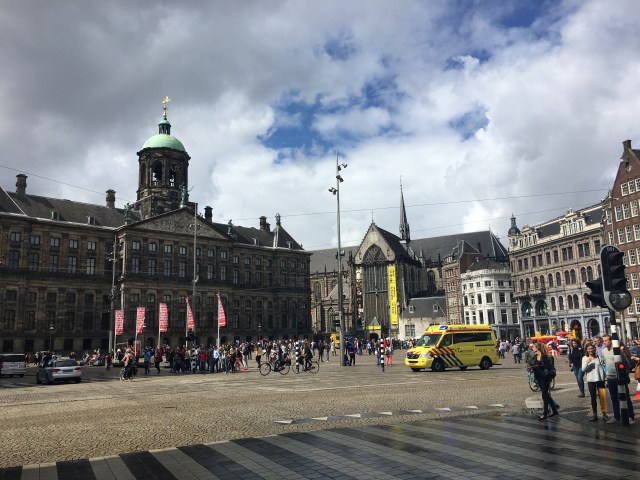
One afternoon we did Rick Steves’ self-guided City Walk which gives a nice overview of Amsterdam. It starts at Central Station, goes through Dam Square, the shopping street Kalverstraat, the Bloemenmarkt flower market, and ends in the Leidseplein, Amsterdam’s square with cafés and theaters. I had Rick Steves’ walking tour in my guidebook, or you can download the audio version here.
Royal Palace, New Church, and Dam Square
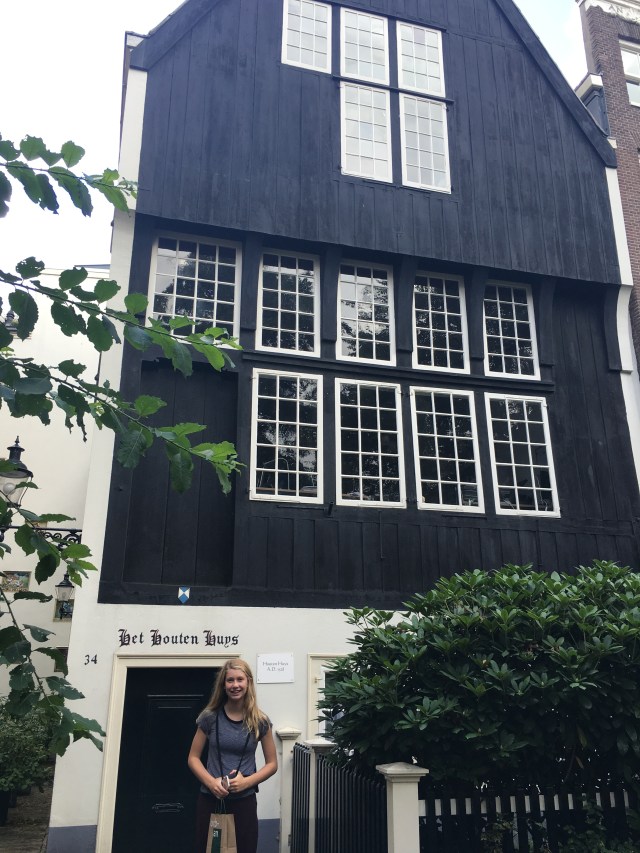
One of my favorite stops along the walk was the Begijnhof, a small hidden courtyard that I never would have known was there without the guidebook, which includes Amsterdam’s oldest house. The “Wooden House” was built in the 1400s, before wooden houses were replaced with brick due to fire danger.
the oldest house in Amsterdam
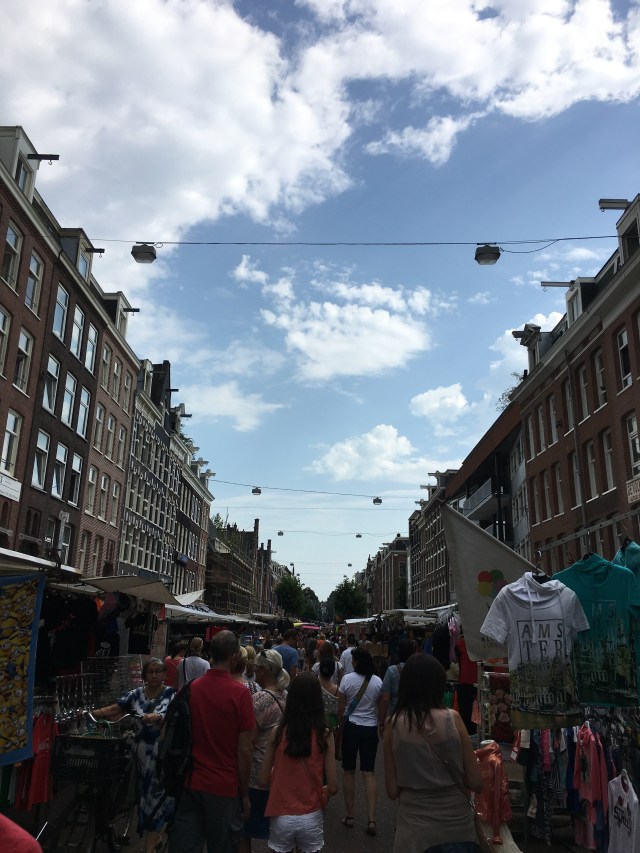
My daughter loved the shopping on Kalverstraat, but many of the stores are ones we have at home. (I think we counted FOUR H&Ms along the street.) I preferred the Nine Little Streets area for more unique shops. I also walked through the Albert Cuypmarkt street market. I wasn’t overly impressed with the wares available for sale but the food items looked delicious. I wished had gone through while I was hungry. The freshly made stroopwafels were very popular.
Albert Cuypmarkt
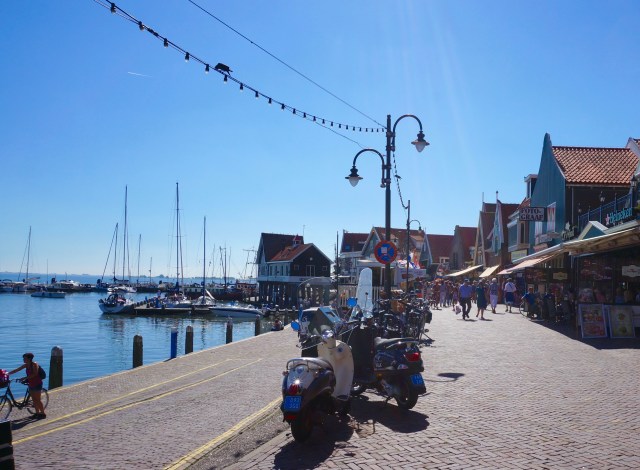
One afternoon we visited two towns in the charming countryside north of Amsterdam. First, we went to the picturesque fishing village Volendam. Sure it’s touristy, but we enjoyed checking out the shops and a nice lunch overlooking the water.
Volendam
The second area we visited was Zaanse Schans, an open air museum with wooden houses and windmills from the 17th and 18th centuries. You can tour inside some of the windmills (for an additional fee) and visit the small shops and museums that demonstrate how different Dutch items were historically made (e.g. cheese, chocolate, clogs, etc.).
Zaanse Schans
There are many other towns close to Amsterdam that would be great to explore if you have the time (Haarlem, Delft, Edam, The Hague). People I met in Amsterdam raved about Haarlem, so that is on my list for next time.
I was surprised by how much I loved Amsterdam. Charming scenery, great museums, history, good food, and friendly people – what more can you ask for?
Note: This is the third and final post for our trip to Africa. See earlier posts for information on Cape Town and Kruger National Park. Victoria Falls was the final stop of our trip.
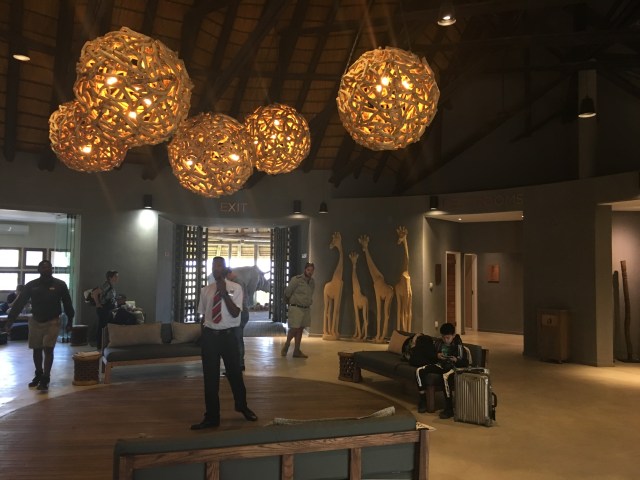
Victoria Falls is one of the seven natural wonders of the world, and located on the border between Zambia and Zimbabwe. You can access the falls from either Livingstone, Zambia or Victoria Falls, Zimbabwe. We stayed on the Zambia side, at the Royal Livingstone Hotel on the Zambezi River. This was the final stop of our Africa trip with our teenage children and another family.
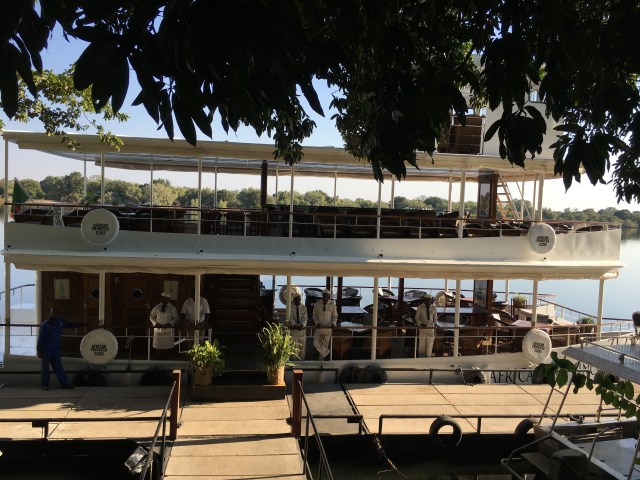
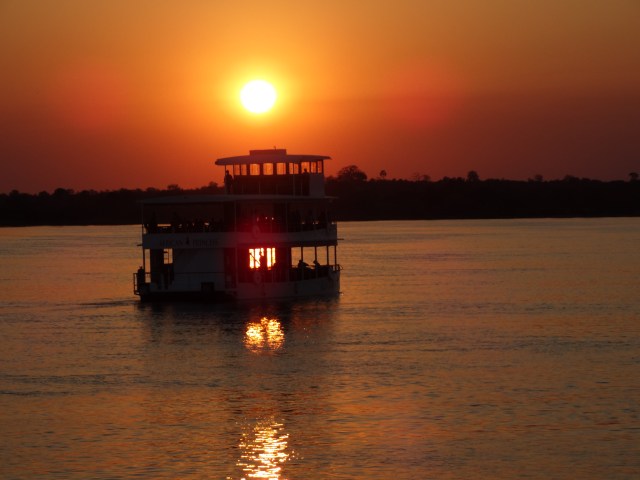
Getting through customs in Zambia took a LONG time and was frustrating, but fortunately our travel agent had warned us of that, and our driver was still waiting for us when we finally got through. After dropping our bags at the hotel we headed out for a sunset cruise on the African Queen on the Zambezi River. This was like a real life version of Disneyland’s Jungle Cruise ride. (Hmm, looks like I got better pictures of the African Princess, which is very similar to the African Queen and was leaving at the same time.)
the African Princess
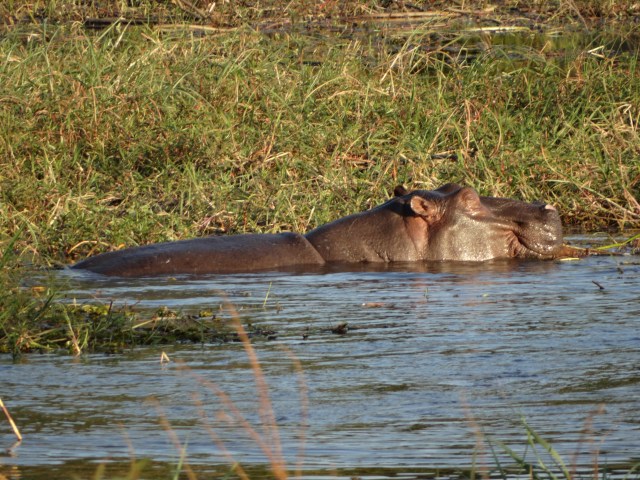
We relaxed on deck while being served cocktails and snacks. Part of the cruise went along the river’s edge, where we saw alligator and hippos. The sunset was spectacular.
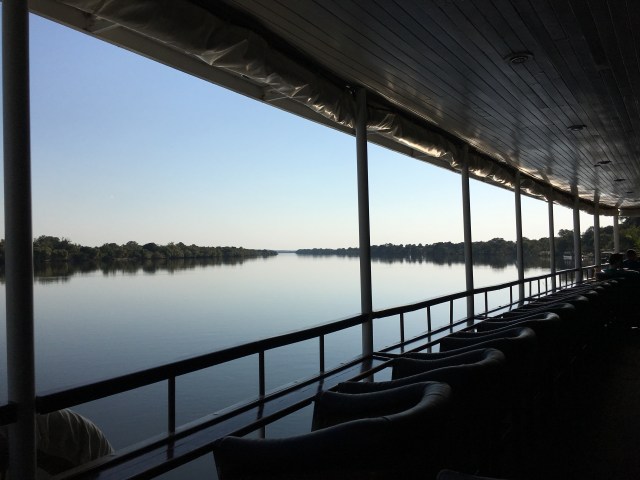
view from the boat, with chairs along the edges facing out
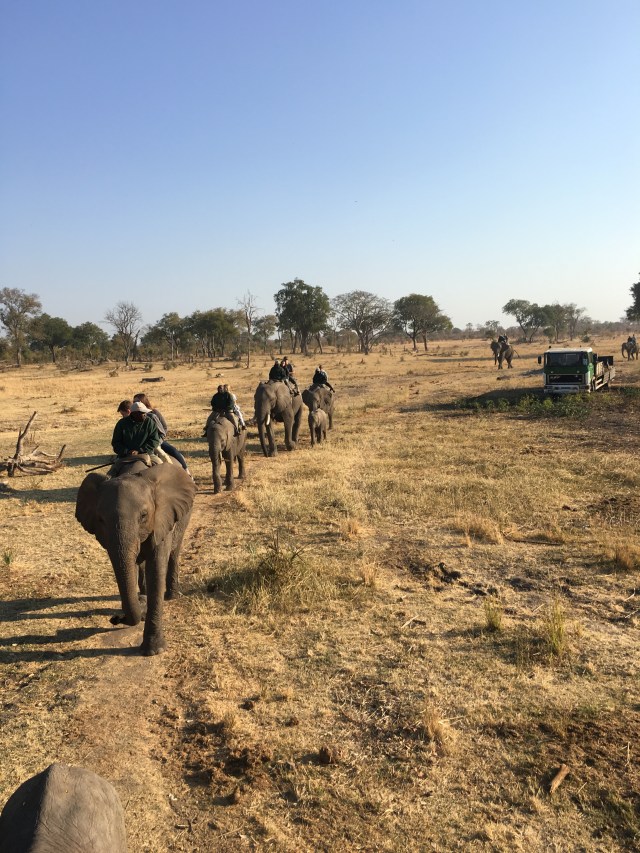
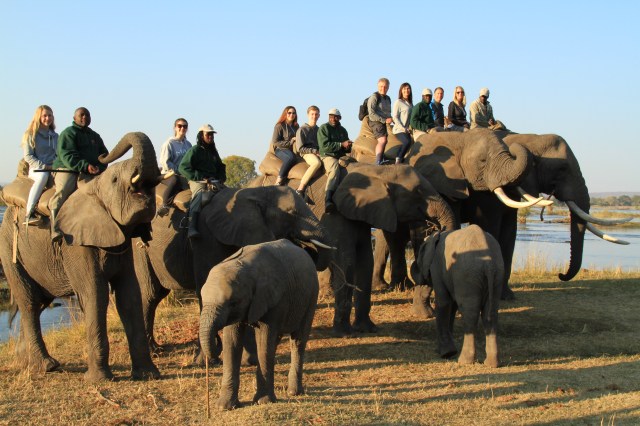
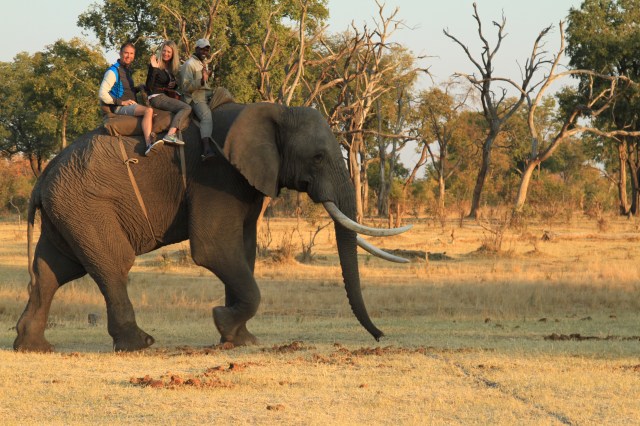
The next morning we set off on an elephant back safari. This was one of the highlights of our trip to Africa. We started at the elephant camp with some general information about elephants and impacts on their population in the world. Then we split off with the guides and elephants. As we walked, our guide told us about the elephants and their behaviors.
The baby elephants walked along with the group.At the end of the ride we got to feed the elephants and give them their reward.
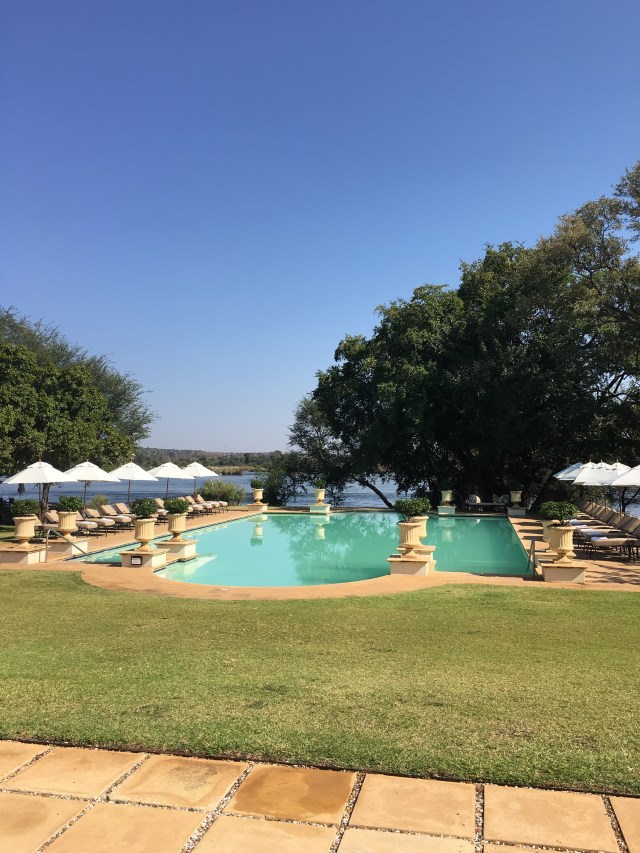
We were all giddy from the elephant encounter and headed back to the hotel to relax for a bit before our afternoon tour. Some chose to hang out or rest in their rooms but most of the adults sat by the pool, which overlooks the Zambezi River.
Not a bad place to spend a couple of hours.
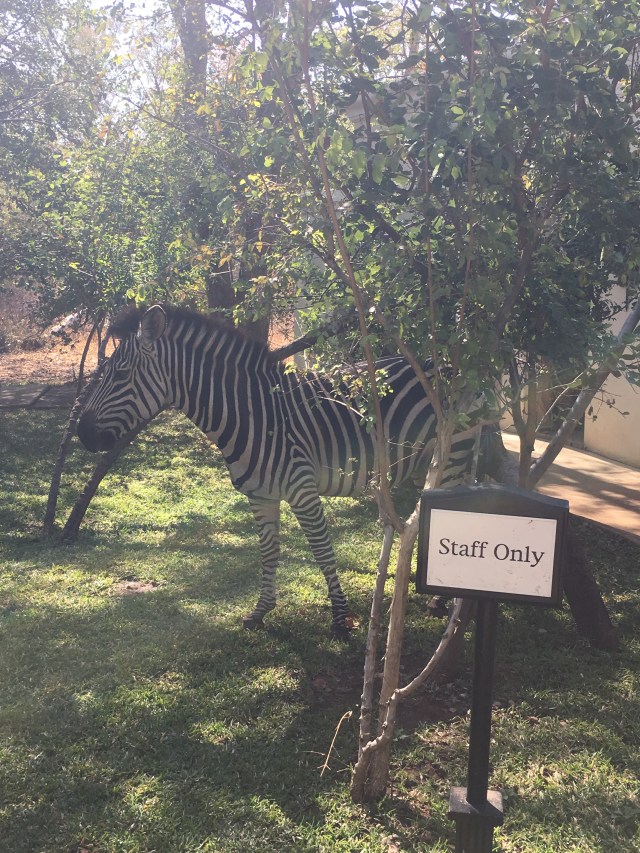
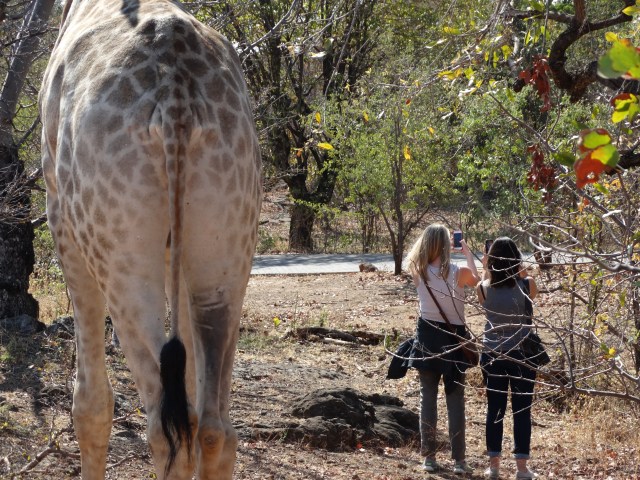
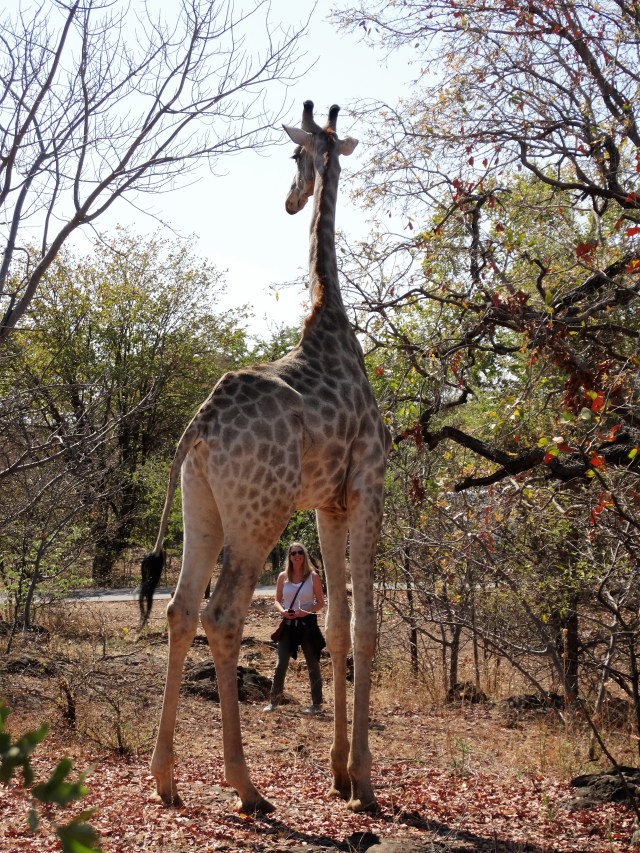
One of the unique things about the Royal Livingstone Hotel is that there are zebra and giraffe wandering the property.
I don’t think he saw the sign.Giraffe selfies.My giraffe friend.
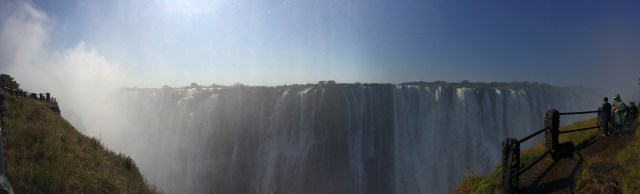
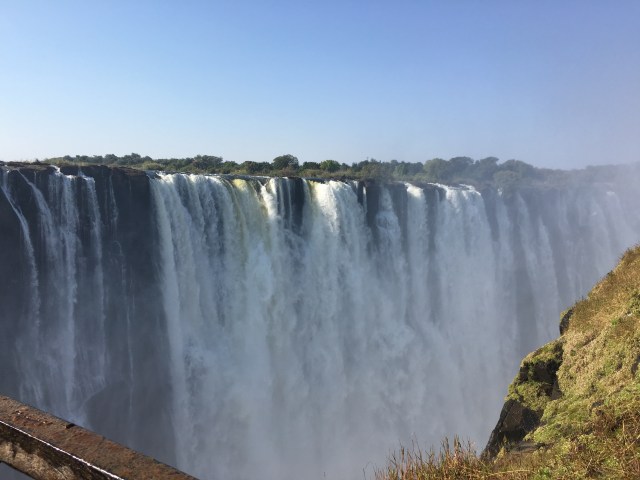
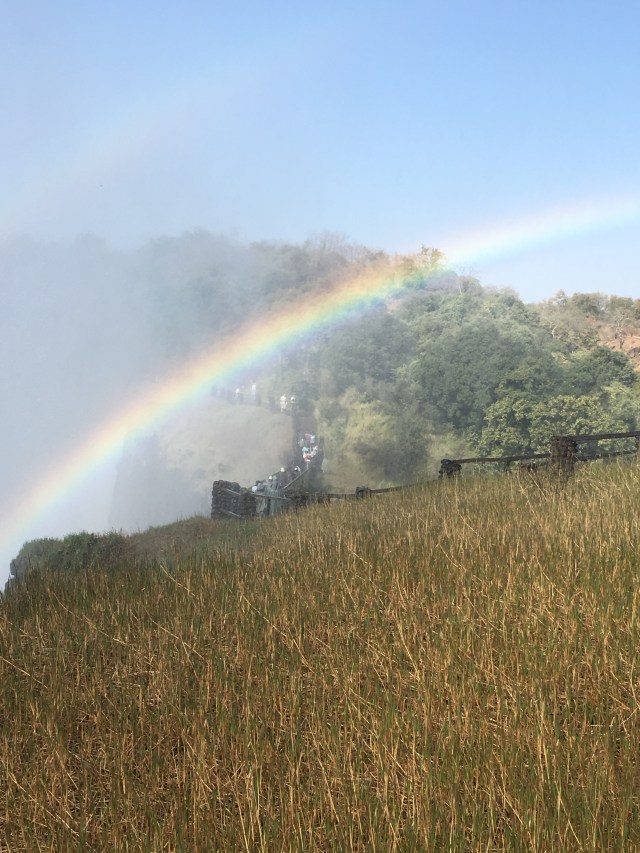
Now for the original reason we came to Victoria Falls…the Falls! The water levels vary throughout the year depending on whether you are during rainy season (late November to early April) or during dry season. The higher water levels during rainy season make the falls larger and more spectacular, but the spray and mist in the air make it hard to see at that time. Our visit during July was an ideal time as water levels were still high enough to be impressive but not so high that the visibility was bad. (Note: Unlike in Kruger Park, I did get bitten by mosquitos in Zambia even though it was dry season, so was glad we were all taking anti-malaria medicine.)
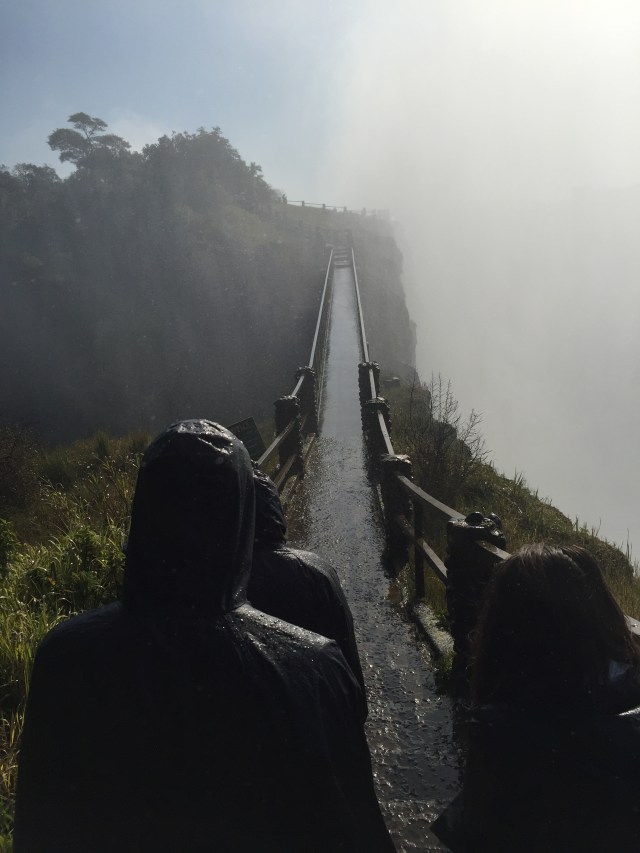
We visited the falls with a guide who talked to us about the history and geology of the area and led us through the trails offering multiple viewpoints. He also loaned us rain ponchos which we definitely needed.
Even with the ponchos on we still got wet, especially our feet and legs. Wear waterproof shoes and bare legs or pants that will dry quickly. The falls are magnificent and worth getting soaked for.
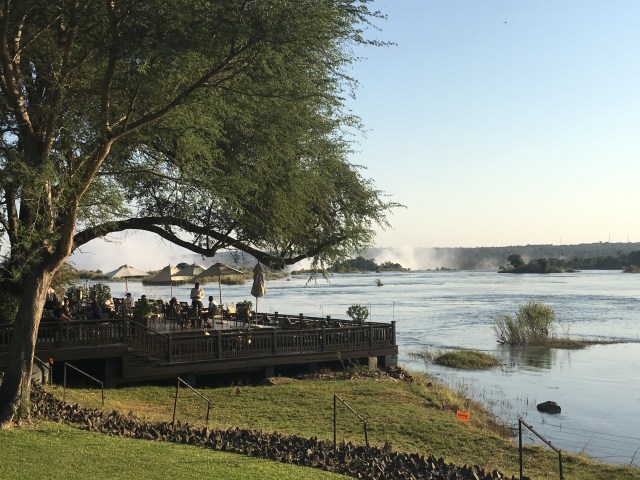
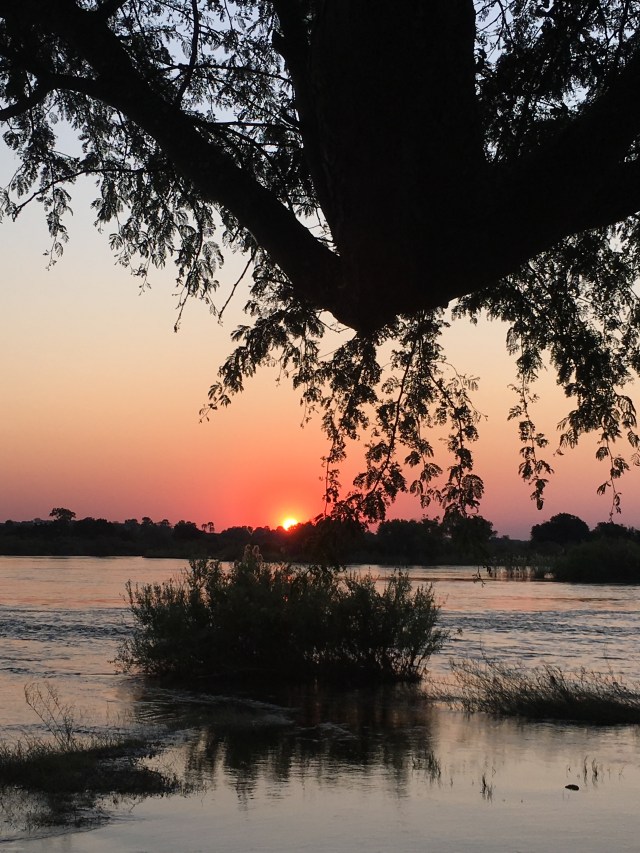
The hotel has a deck overlooking the Zambezi River and you could see the spray from the falls from there. This is where we spent our last evening in Africa, enjoying another stunning sunset and looking back over all the adventures we’d had in the past two weeks.
We had so many wonderful and memorable experiences, in Zambia and also in Cape Town and the safari. I flew home very grateful for the experience and getting to share it with family and friends.
Note: This is part 2 of our 3 part trip to Africa (Cape Town, Kruger National Park, and Victoria Falls). See other posts for detail of the Cape Town and Victoria Falls segments.
After some research, we chose Kruger National Park in South Africa for our family safari trip. We worked with a travel agent in South Africa to select the Lion Sands Narina Lodge which is along the Sabie River. It was WONDERFUL. We stayed for three nights but would have happily stayed longer.
We flew into the small Skukuza Airport, which is definitely the coolest airport I have ever been to.
Skukuza Airport
Our guide for our stay met us at the airport and drove us the short distance to the lodge. He would be our driver for all of our game drives.
When we got to the lodge we were welcomed with food and drinks, which we would soon find out would be plentiful during our stay. We ate so much. And we got to try some unusual game, like warthog and kudu (both of which we also saw on game drives).
Our welcome lunch. Yep, the teens found the WiFi.
Our trip was in Africa’s winter (summer in the U.S.), which is dry season in Kruger. This means the river is low, and the animals spend a lot of time close to the river because water is scarce (and we had no problems with mosquitos). The lack of foliage at this time of year can make it easier to spot the animals. The Narina Lodge is right on the Sabie River, so we saw animals at the river, both from the main lodge and also from our rooms (and bathrooms). Our friend saw a leopard from her outdoor shower on two different days!
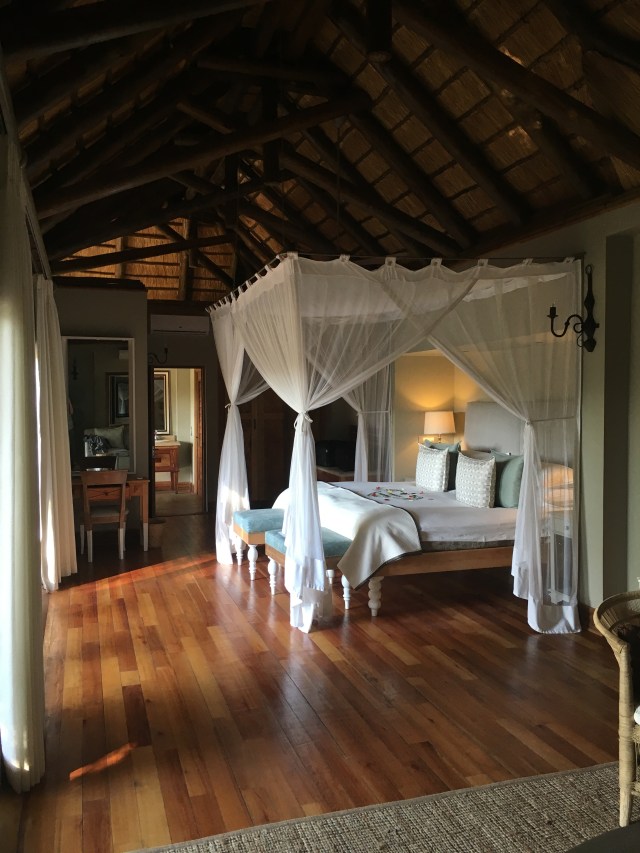
Our room – there was a welcome message written in flowers on the bed.All of the rooms had decks with plunge pools overlooking the river. This is where we spent time in the afternoon between game drives.The bathroom also overlooked the river. You could watch wildlife while showering.
There were a lot of monkeys around and you had to remember to make sure all doors and windows were locked so they wouldn’t go into your room. Apparently they can open doors!
monkey selfie
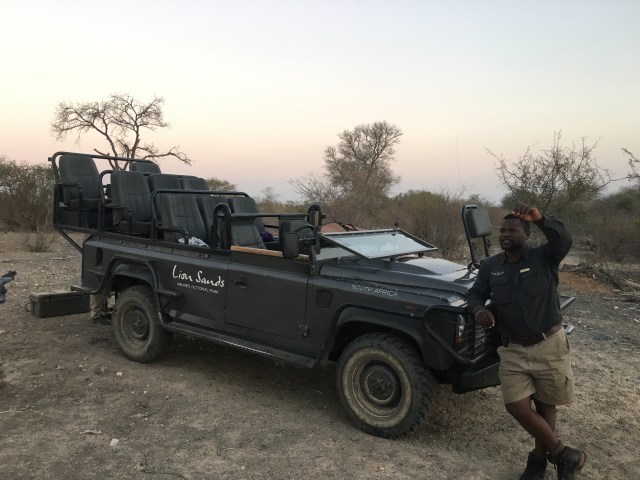
There were two game drives every day, one in the morning and the second in the late afternoon/early evening. This is when the wildlife is most active. Ismael, our guide, drove the vehicle and Collin, our tracker, sat in the jump seat to track the animals.
Our guide Ismael
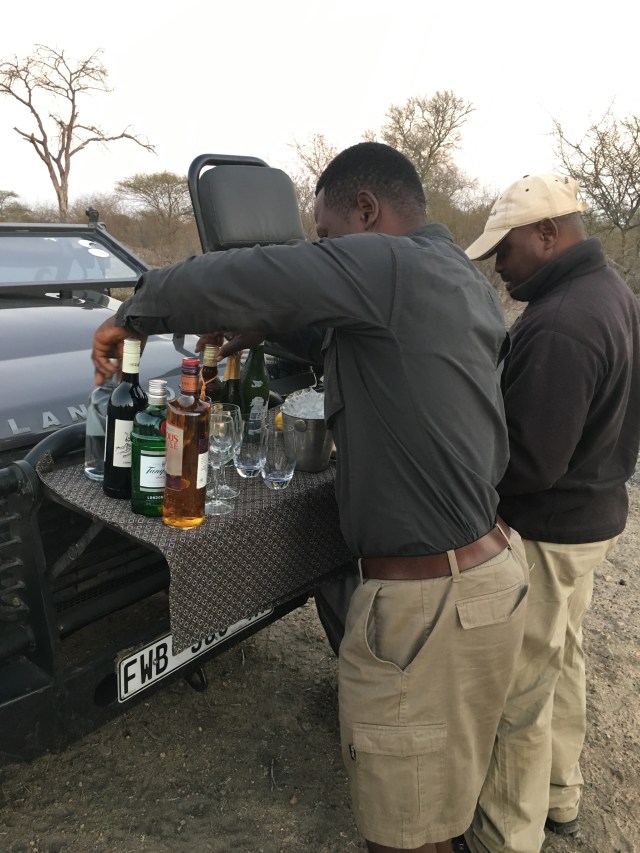
We always made a stop during the drive for some snacks and refreshments.
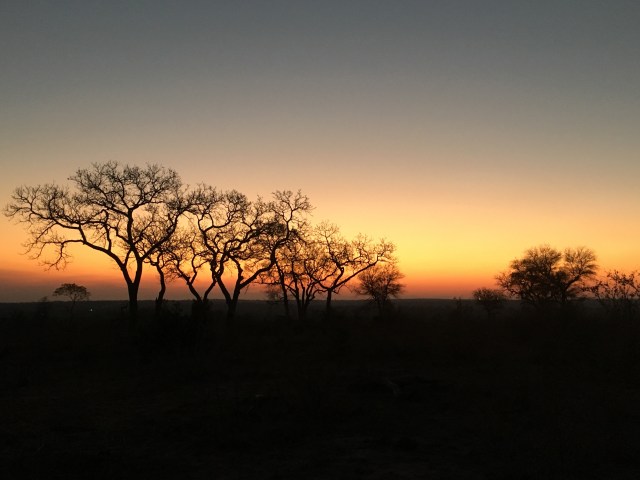
Getting ready to pour some “sundowners”The sunsets were spectacular.
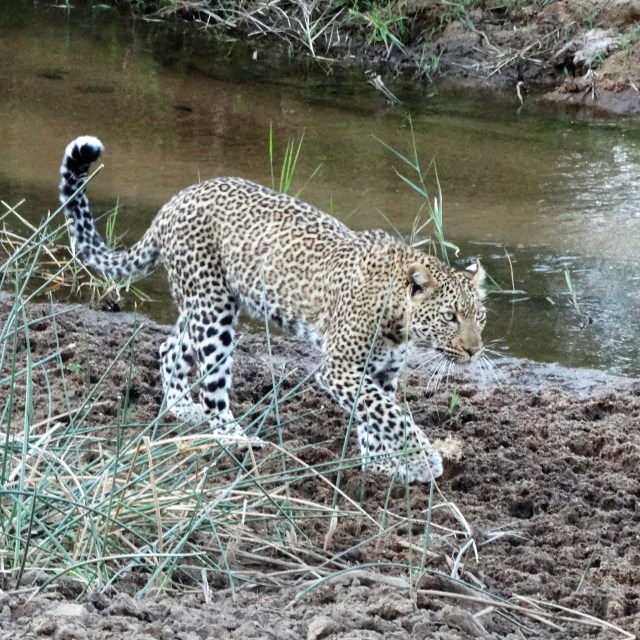
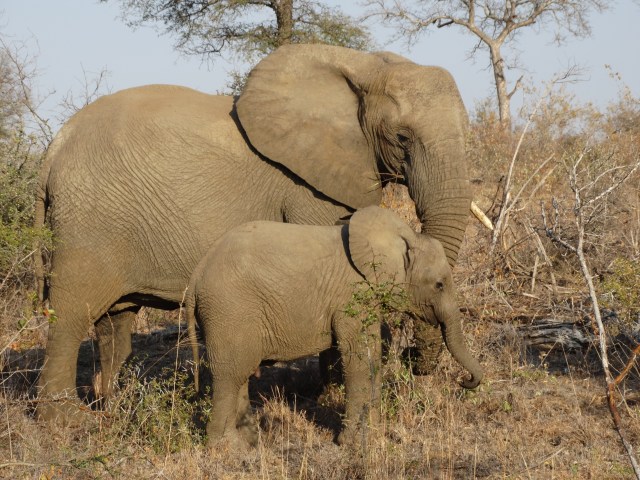
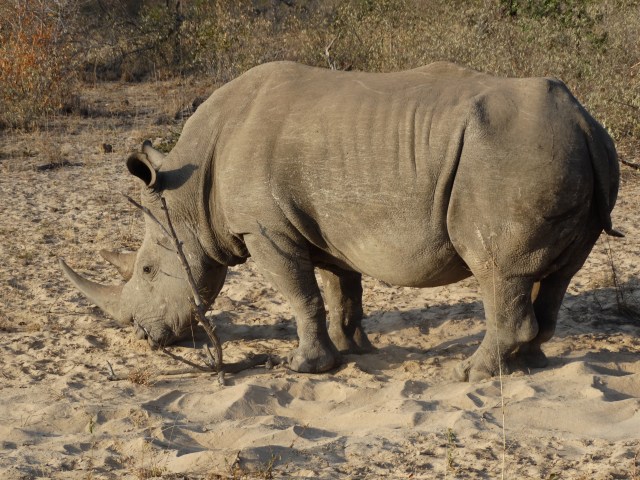
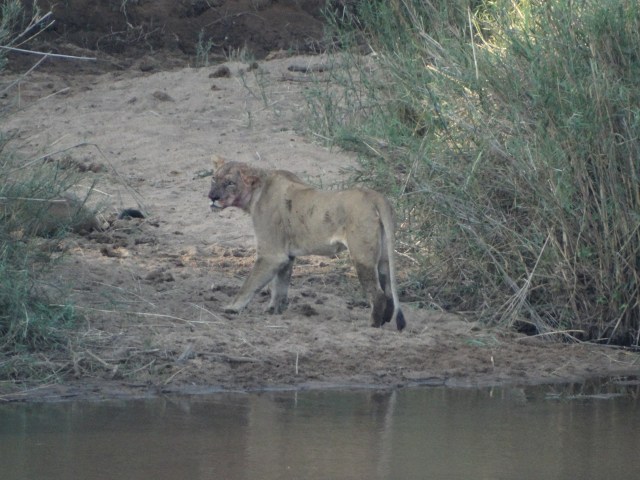
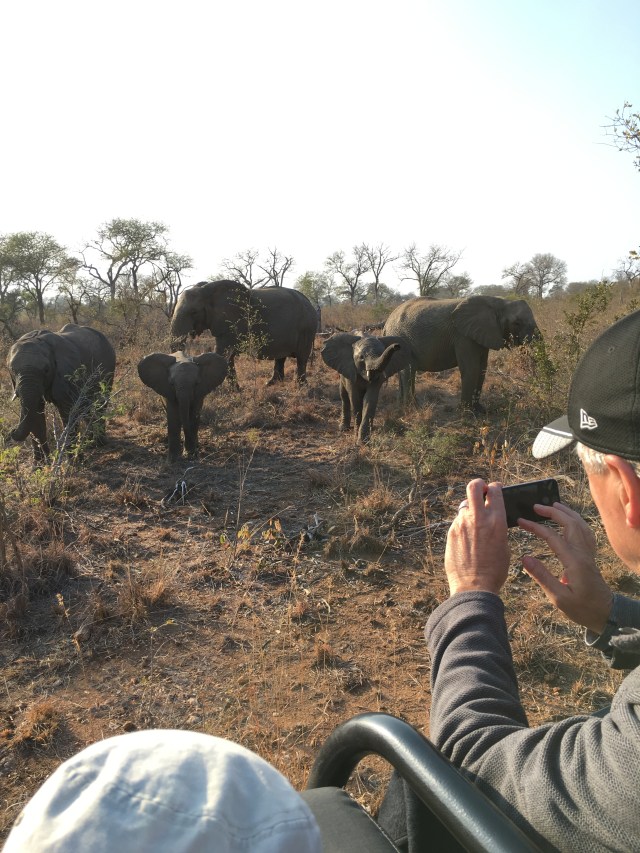
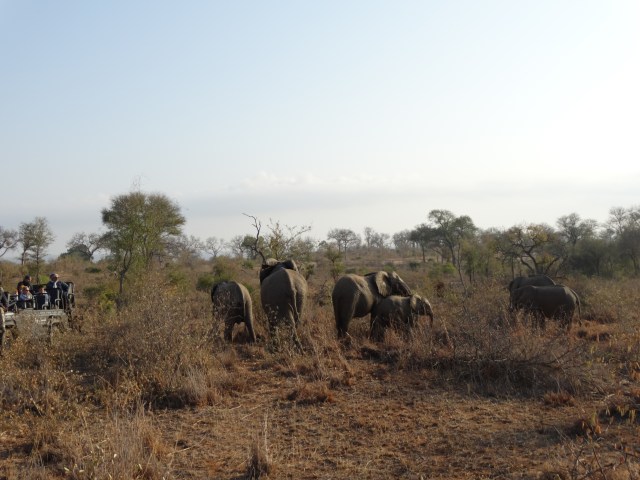
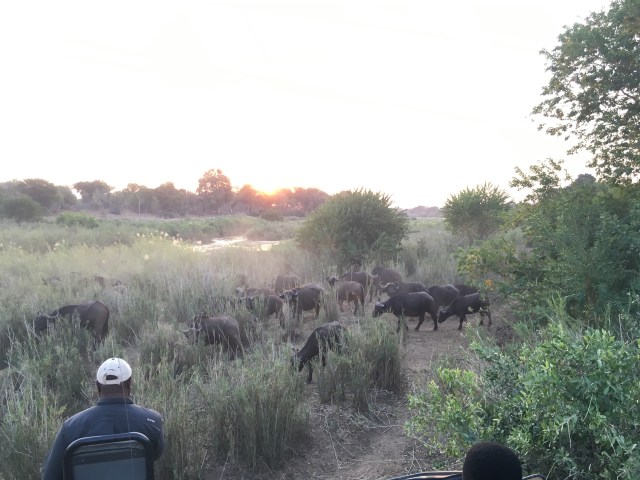
Many people hope to see the “Big Five” while on safari; lion, elephant, leopard, rhinoceros, and Cape buffalo. We saw all of the Big Five and so many other animals too.
The Big 5:
The lions had just had a kill so we kept our distance (if you look closely you can see the blood on the face and sides of the lioness). But with most of the other animals we were shocked with how close we got to them. It was so exhilarating to see them up close in their natural habitat.
Here are some photos that I think give you a feel for how close we were to the animals:
This was rare for us to be out of the vehicle but we did get a few opportunities when the Guide and Tracker felt it was safe.
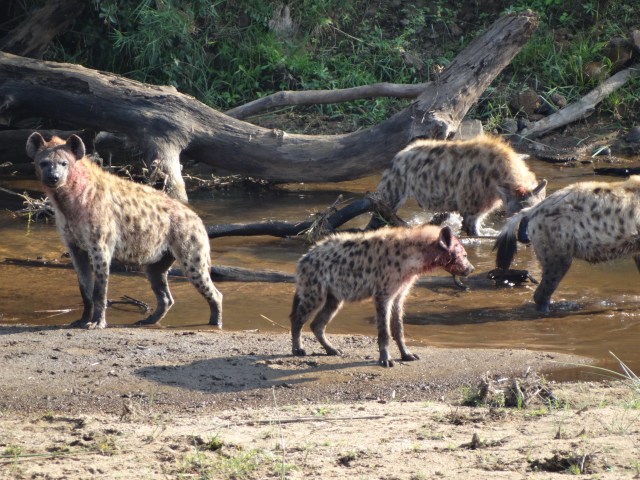
The lions weren’t the only animals we saw who had just had a kill. We also came across a pack of hyenas with blood on their faces and necks.
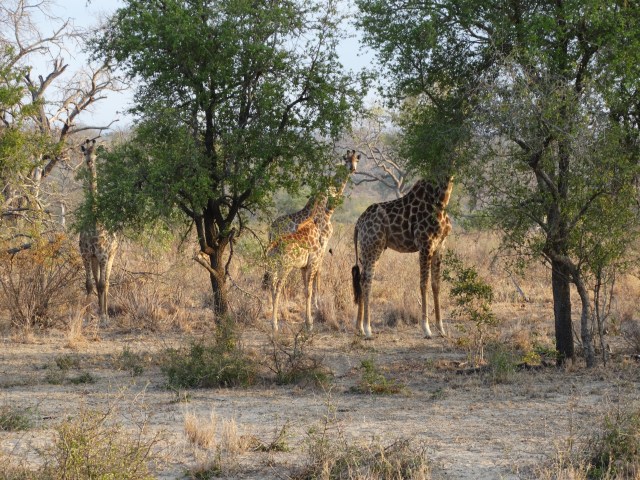
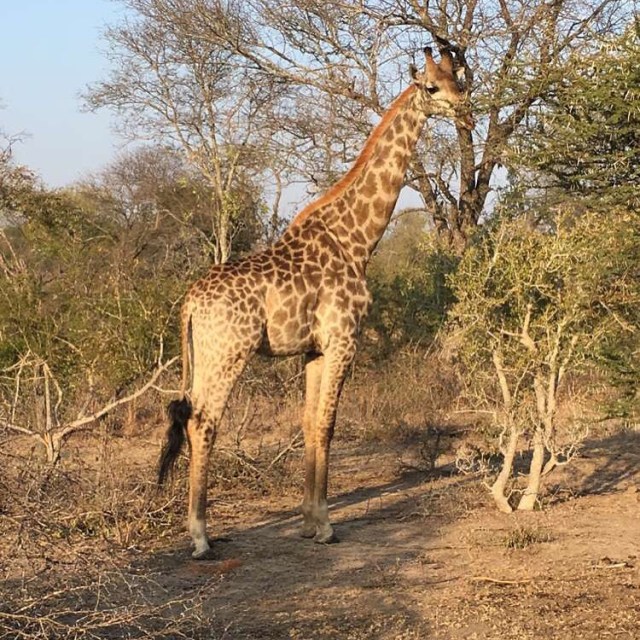
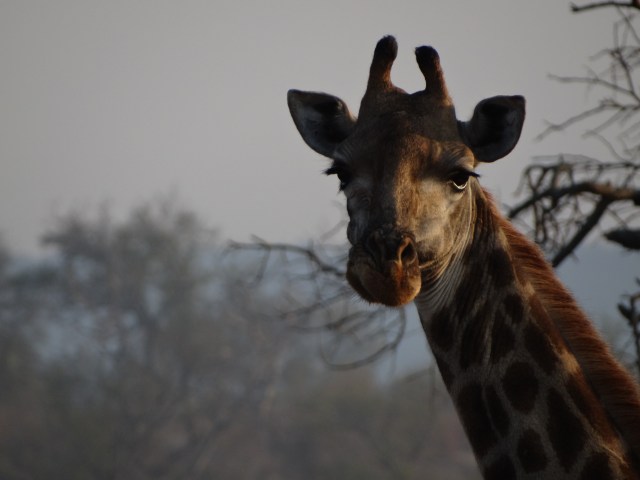
Giraffes are a favorite of mine, so while they may not be in the Big 5, I loved seeing them.
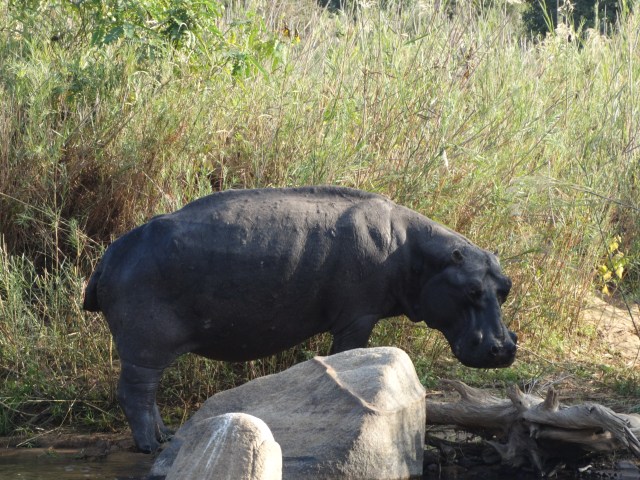
I had never seen a hippo out of the water before. Apparently hippos are very aggressive and one of the most dangerous animals in Africa.
Hippo by the river
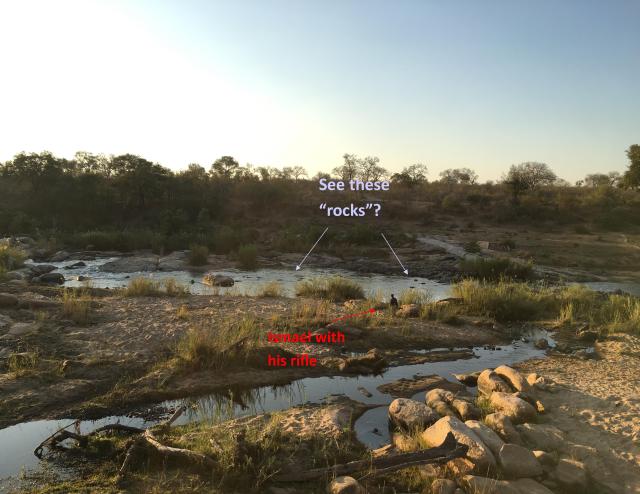
On one of our evening drives our guide had us stay in the jeep while he went to check out a spot he knows. After deciding it was safe, he had us follow him down to the river where a large group of hippos were submerged.
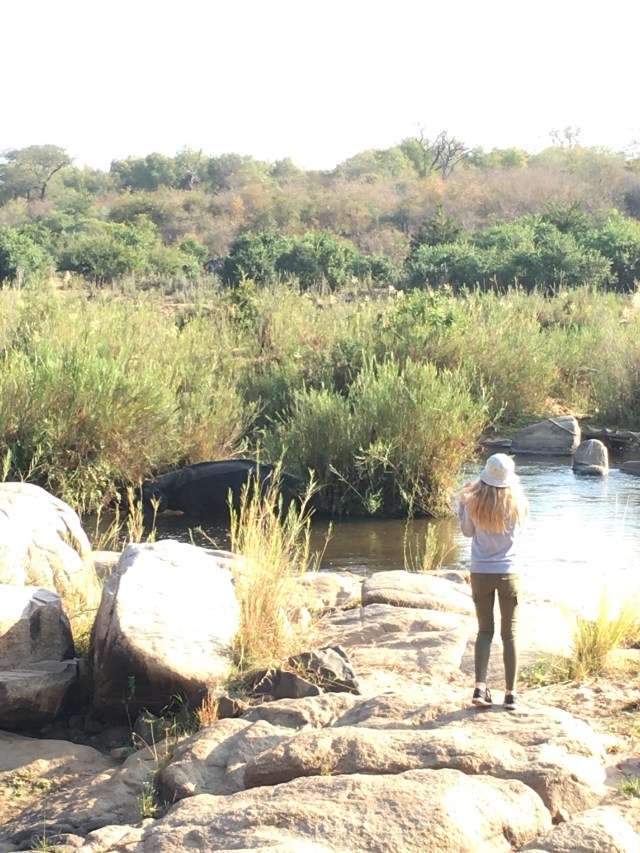
When you look closer you find out many of the “rocks” were hippos – with all eyes on us. I would guess there were at least 20 in the pool.
Zebra were also on my list of “hope to see” so I was happy when we found a herd of them on one of our drives.
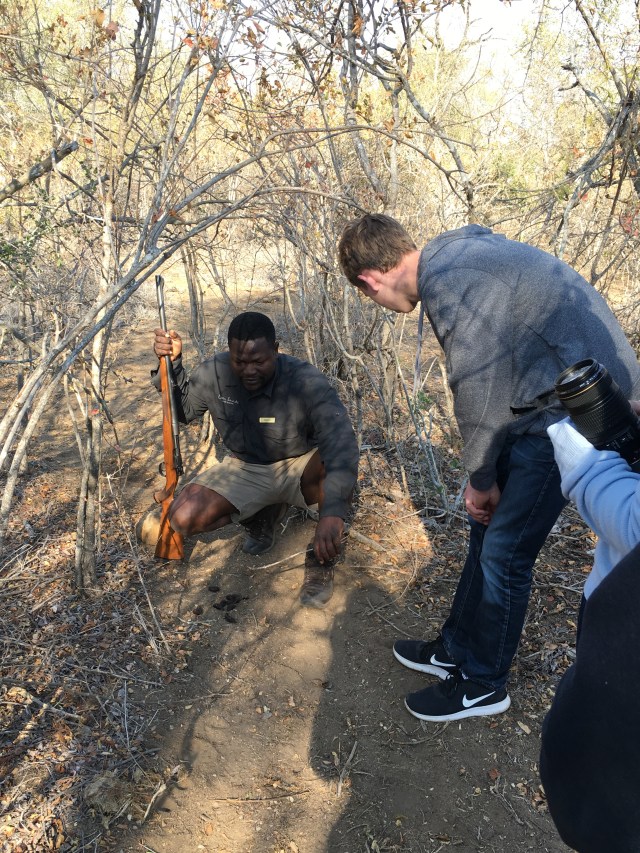
One morning after our game drive Ismael took us on a bush walk. He showed us scat and tracks along the way, and explained what he looks for and what clues animals leave behind.
This safari was a such an amazing experience for all of us. We weren’t ready to leave when it was over, and would have loved to stay longer (or to have followed it with a lodge in another area). It is a bucket list trip that I highly recommend to anyone, especially animal lovers.
Planning note: We did take anti-malarial pills for visiting Kruger Park, but none of us got bitten at all (and mosquitos love me). I’m assuming visiting during dry season helps with the mosquitos. The doctor also had us take prescription and OTC medications for stomach issues but none of us needed it.
Note: I am breaking our AMAZING trip to Africa into 3 posts, one for each leg of the trip: Cape Town, Kruger National Park, and Victoria Falls. This is the first post.
I’ve had a hard time starting this blog post because I really want to do this trip justice. It was truly a trip of a lifetime, a wonderful experience for every member of my family. First a comment on traveling with teens – I LOVE it. Yes, we like to share new experiences and cultures with our children. But what stands out to me most at this age (currently 16 and 13) is that we get to enjoy them without all the distractions of home. We are at a point in their lives where it has gotten harder to find quality time together. Busy lives of today’s teens don’t always allow for a lot of free time. When they do have it, they want to spend it with their friends, on their phones, in their rooms, or on the computer. And I know it won’t be long before they go off and start their own lives separate from us. So we savor the moments of laughter and conversation that we have with our kids when we are lucky enough to travel with them – knowing that they were much less likely to happen at home when everyone is going different directions.
It also added to the joy of the trip that we traveled with another family, close friends who also have two teenagers. I think we all might be just a little better behaved when we’re with people who don’t live with us every day, who aren’t as intimately familiar with our individual flaws and idiosyncrasies. You have more people you love to turn to with a grin plastered on your face and say “Can you believe we’re here?? This is amazing!”. You know if something goes wrong, you have good friends to keep you company and commiserate with. And adding other teens for mine to interact with prompted some interesting group dinner conversations.
We started our trip to Africa in Cape Town, which is a wonderful city to visit as a family. It is beautiful, full of a variety of things to do and see, really something for all interests. We experienced stunning scenery, a variety of wildlife, culture, history, and great food and wine. And the exchange rate between the US dollar and the Rand is so generous right now that everything felt like a steal.
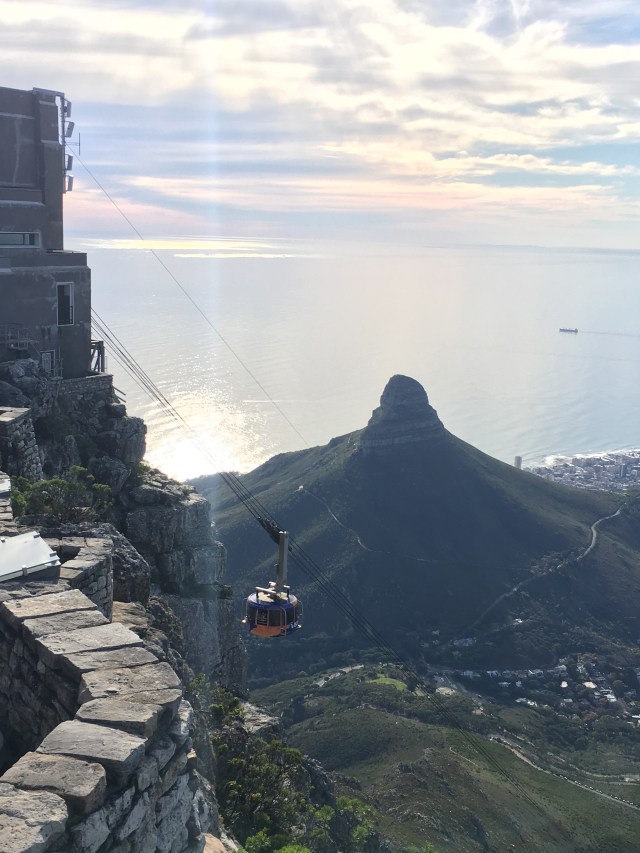
We had been advised to head to Table Mountain as soon as we had good weather because the Cableway is weather dependent. I pre-booked tickets online before our arrival, which are valid for a 7 day period. It was a nice sunny day when we arrived in Cape Town, so after checking into our hotel we headed to the lower cable station.
Cable car approaching the upper station with Lion’s Head mountain in the background
Once at the top there are magnificent views of the city and beyond. It was a great way to get a visual overview of the layout of the city and surrounding areas.
Cape Town city bowllooking Northlooking South towards the Cape of Good Hope
Is this how you pictured Africa? Not me – I wasn’t expecting so much green and mountains. Such a gorgeous part of the world. We were glad we visited Table Mountain the day we did because there was wind (and a little rain) later in our visit and the tram was closed intermittently.
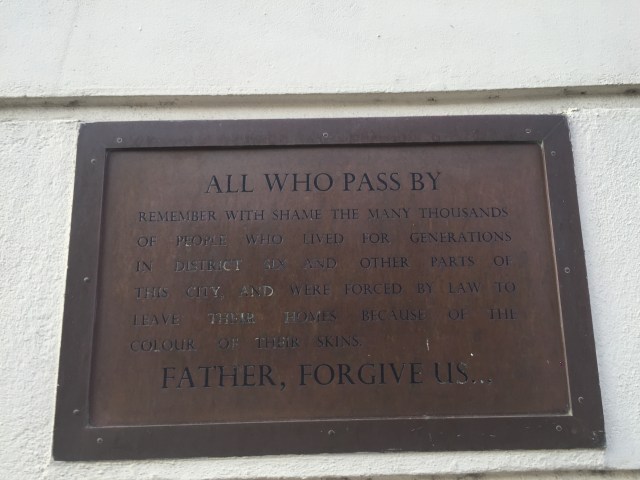
The next morning we set off on a cultural day tour to learn about apartheid and its impact on South Africa. The first stop was the District Six Museum which is in the former inner-city residential area where non-whites were forced out during apartheid.
plaque outside the museum
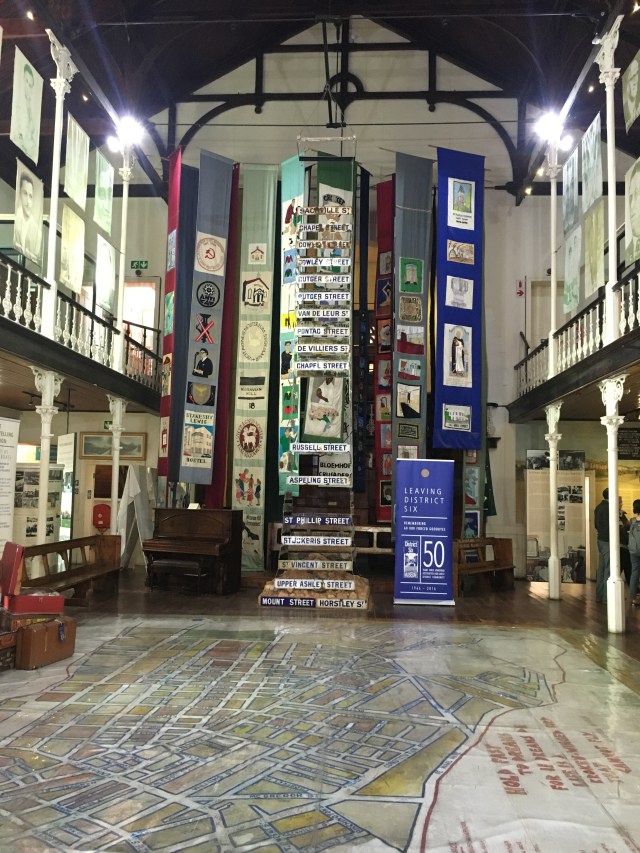
The museum includes pictures and other artifacts to give you a feel for what the community was like before apartheid and how residents’ lives were impacted.
The map on the floor of the museum showing what District Six was like before it was bulldozed.
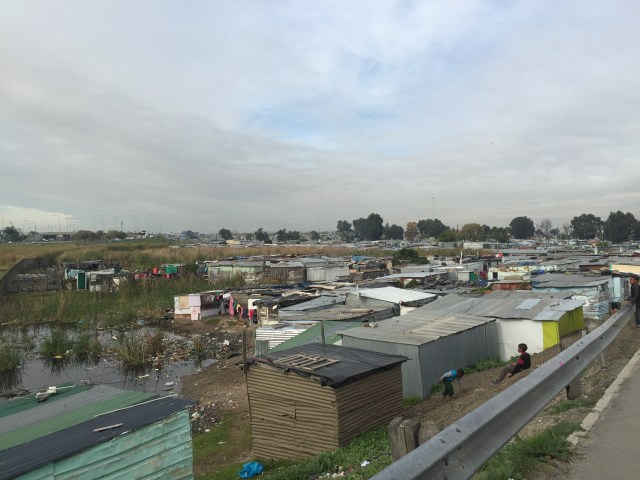
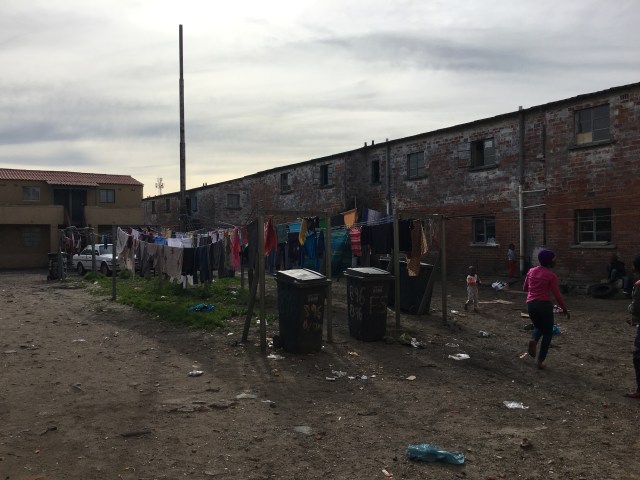
After visiting the museum and getting an understanding of how people were forced from their homes, we visited some of the townships, where people were moved. I was surprised to learn that a majority of Cape Town residents still live in these primitive living conditions.
township outside of Cape Town
At one of the townships we visited we went on a guided walking tour and saw inside some of the homes. When we were choosing our activities before leaving home for the trip, my 16 year-old wasn’t thrilled about the idea of visiting a township because he didn’t want people to feel like they were animals in a zoo for people to come and ogle out. While it was an informative and eye-opening visit, there were uncomfortable moments where we felt exactly like that. But the people in the townships were very welcoming and friendly, and the visits provide some revenue to the residents.
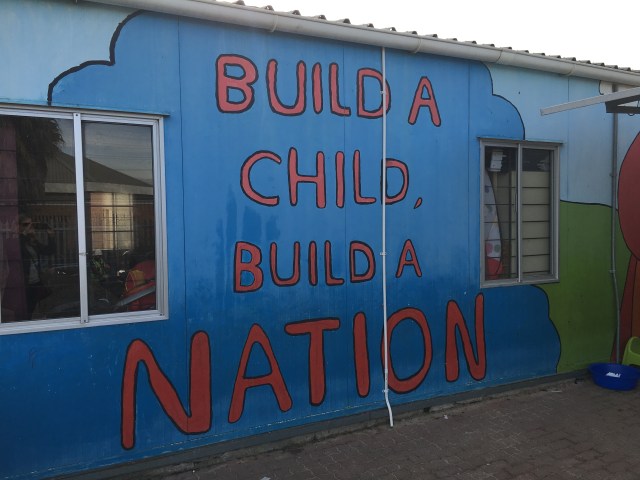
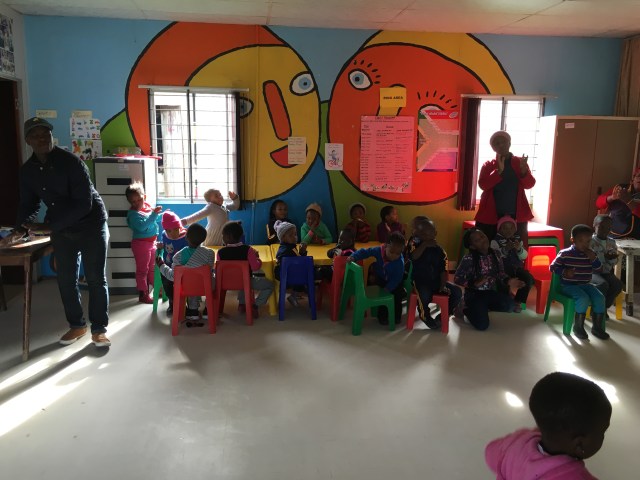
Part of our township tour included a visit to a pre-school.
The children were darling and sang songs for us, and a couple of the kids danced.
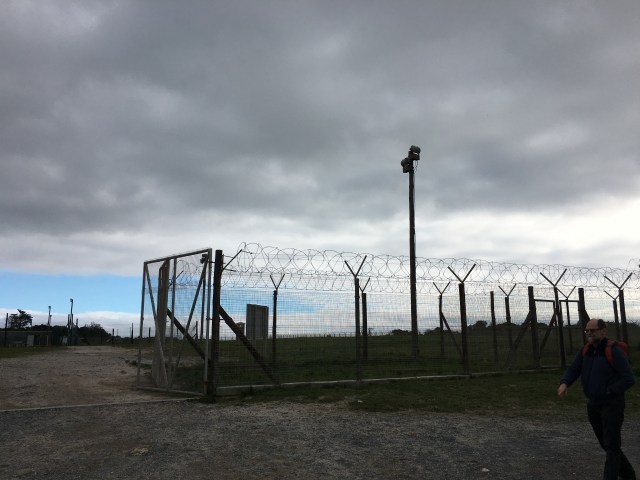
After visiting the townships we returned to the city and caught the ferry to Robben Island, the former prison where Nelson Mandela was imprisoned along with other political prisoners. When we arrived on Robben Island, the tour started with a bus ride around the island.
Robben Island
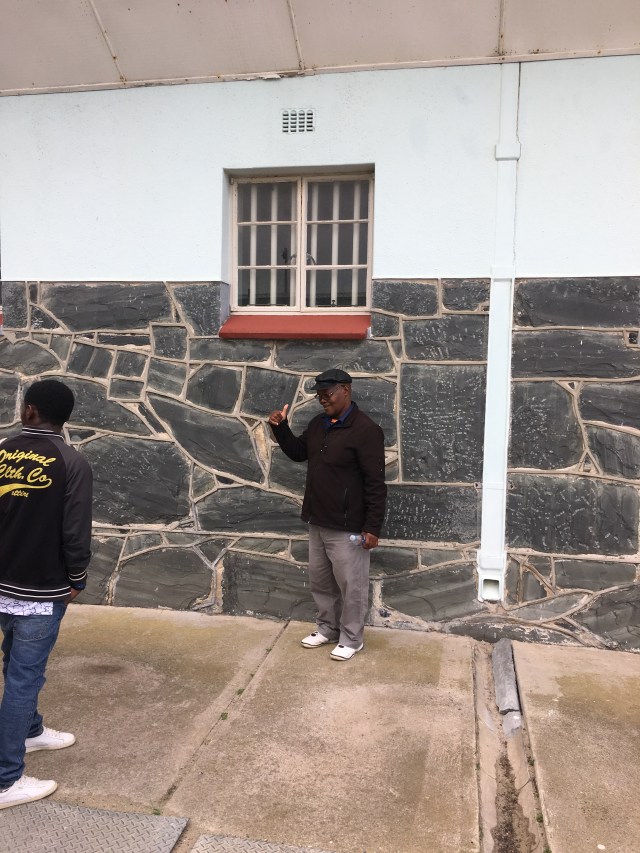
Then you go on a walking tour in and around the cell block where Mandela lived, with tours led by former Robben Island prisoners.
Our tour guide, a former prisoner, standing outside the cell that was Nelson Mandela’s
Nelson Mandela’s cell
This was a powerful and thought-provoking day for all of us.
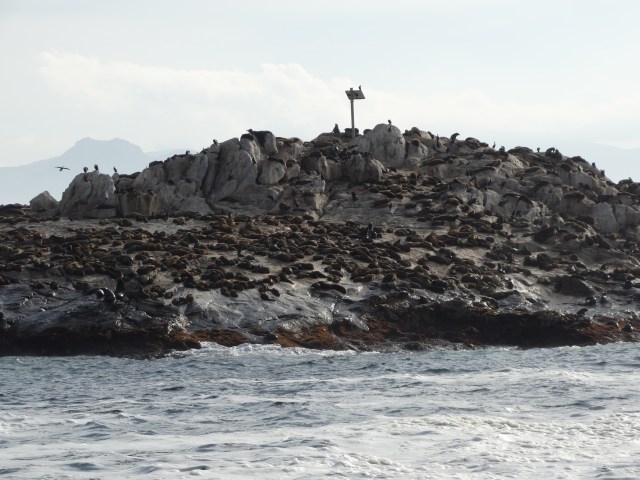
The following day we went for a complete change of pace. South Africa is one of the top places in the world to see great white sharks, so we ventured out on a shark cage diving trip! Most companies go out of Gansbaii, but we were there at a time of year when you can also go from False Bay, which is much closer to Cape Town. The boat heads out to Seal Island, home to 60,000 seals, which attracts the sharks.
Seal Island
The crew lures sharks to the boat using a fake seal as bait. We put on wetsuits and climbed into the cage on the side of the boat.
In the cage
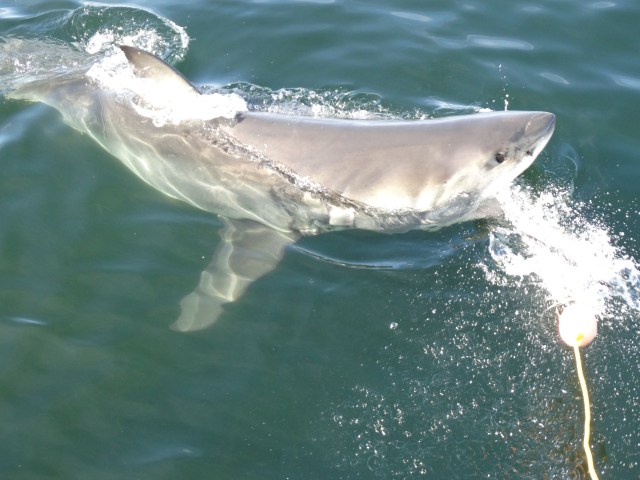
When a shark approaches everyone dives under the water to get an underwater view of the shark. This was much less scary than I expected it to be. I was envisioning the shark attacking the cage but they would actually gracefully glide by.
A shark approaches!
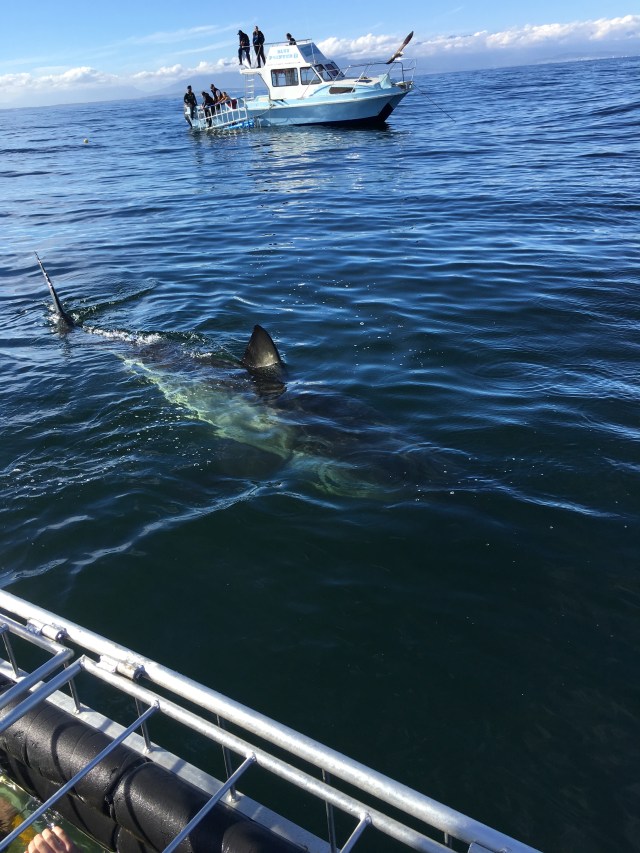
Some of our friends chose not to go in the cage but still got a great surface view of the sharks from the deck of the boat.
surface view of one of the sharks we saw
All of us thought this was an awesome experience, whether we dove in the cage or not.
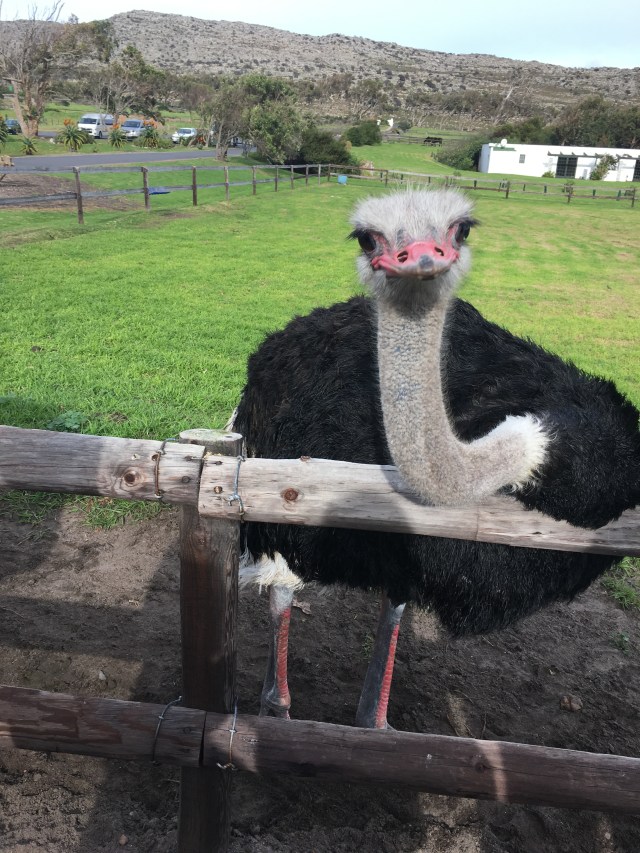
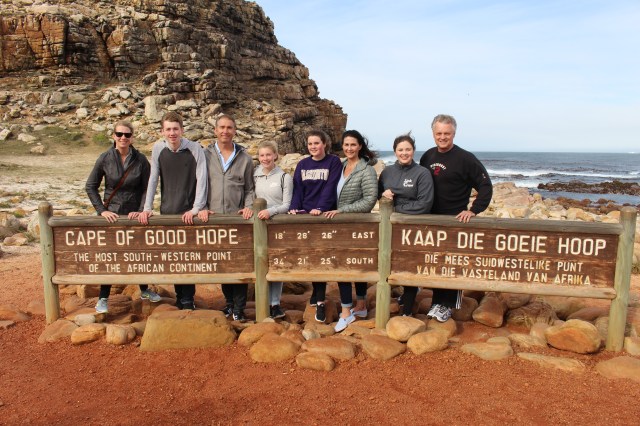
The following day we went on another day tour, this time to the Cape of Good Hope, the most south-western point of the African continent. No, it apparently is not the most southern point, as many people believe. On the drive down the cape we stopped in a few scenic coastal towns and an ostrich farm (where we fed the ostriches – their beaks are strong!).
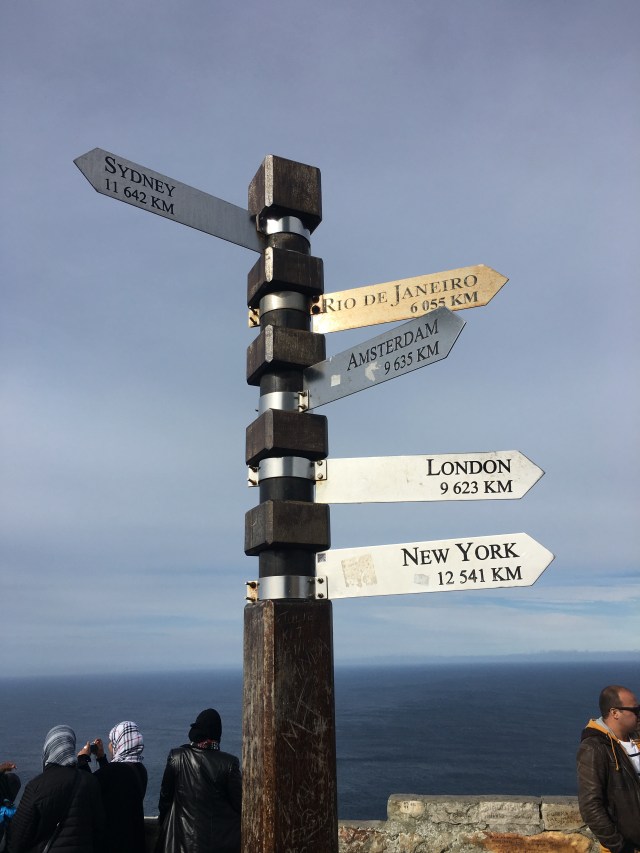
We hiked up to the lighthouse at the Cape of Good Hope for amazing views in every direction.
distances from the Cape of Good Hope
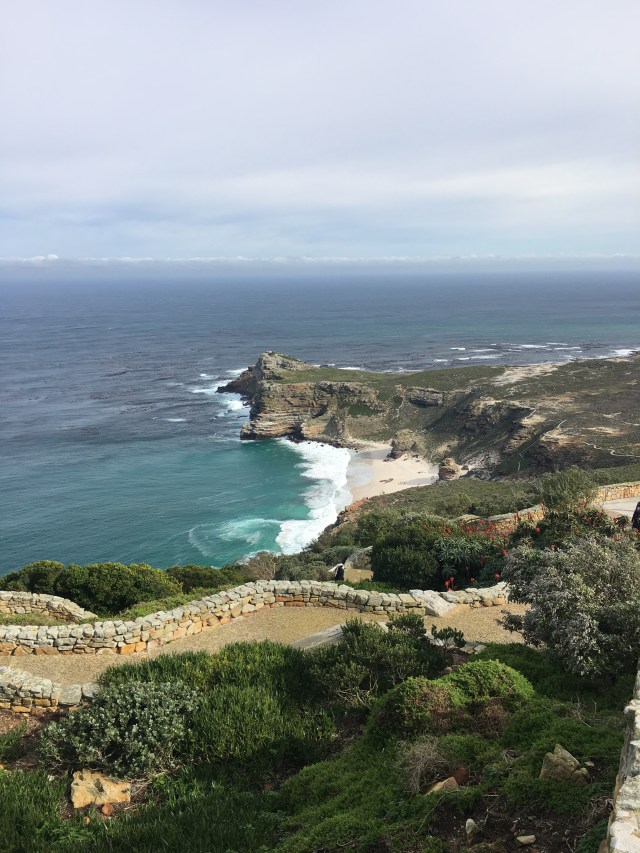
We then hiked from the lighthouse down to Cape Point.
looking west from the cliffs above Cape Point
It was very windy at Cape Point and our guide said sometimes it is so windy that they have a hard time getting the car door open.
sign at the Cape of Good Hope
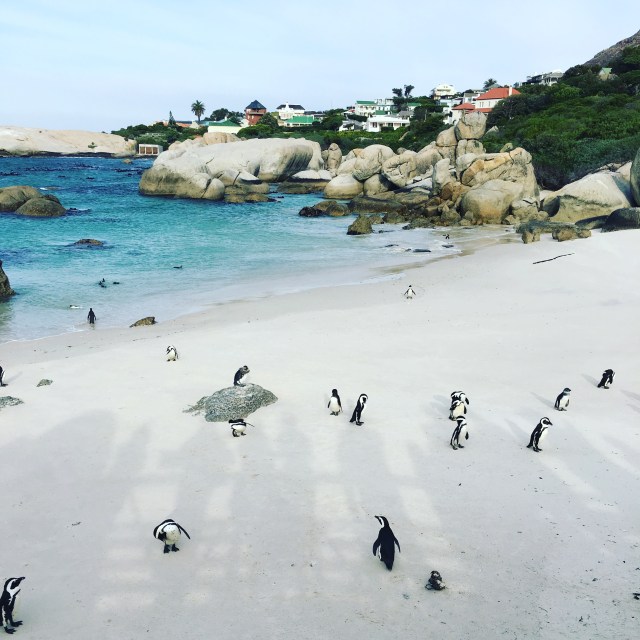
One of the last stops of our day was Boulders Beach to see the African Penguins. They were so cute!
Boulders Beach
Phew – we’ve packed a lot of amazing stuff into a few fabulous days. Our final day in Cape Town we stayed in town and explored the City Bowl area. We started with the Castle of Good Hope, a 17th century fort that is the oldest building in South Africa. The military museum there is supposed to be very interesting but unfortunately it was closed during our visit due to Castle renovations.
Castle of Good Hope, with Table Mountain in the background
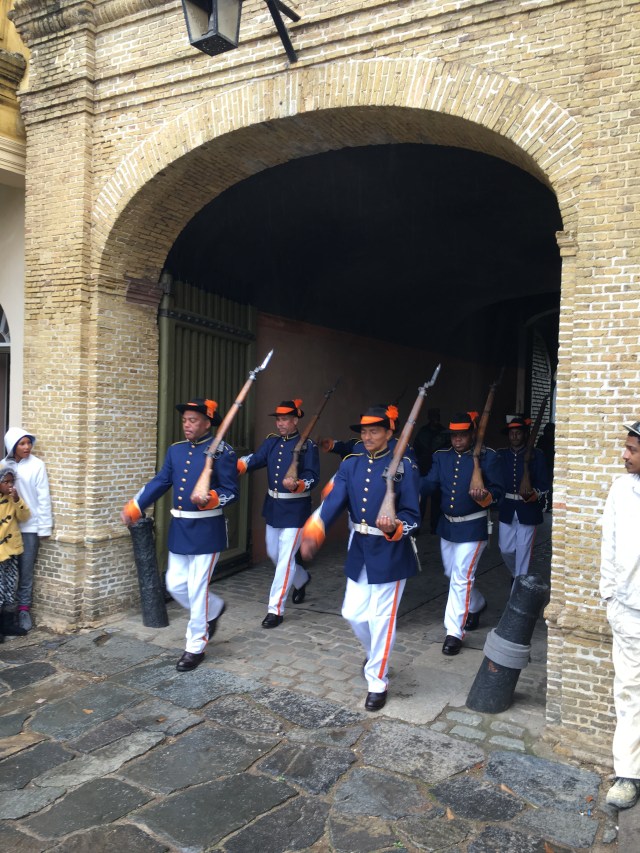
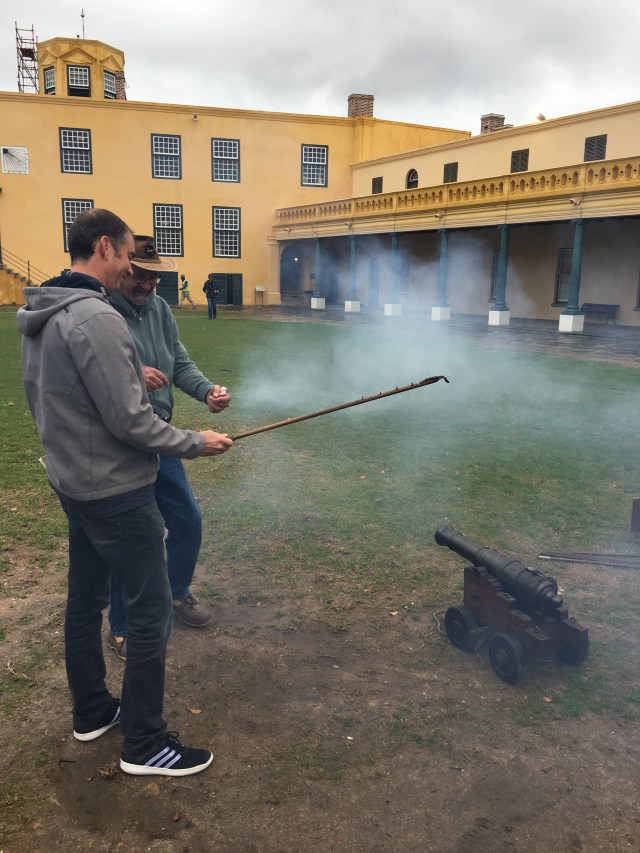
The Castle Guard performs a key ceremony twice a day which depicts the unlocking of the Castle. This is followed by the firing of the signal cannon.
Key ceremony
We got to fire the cannon!
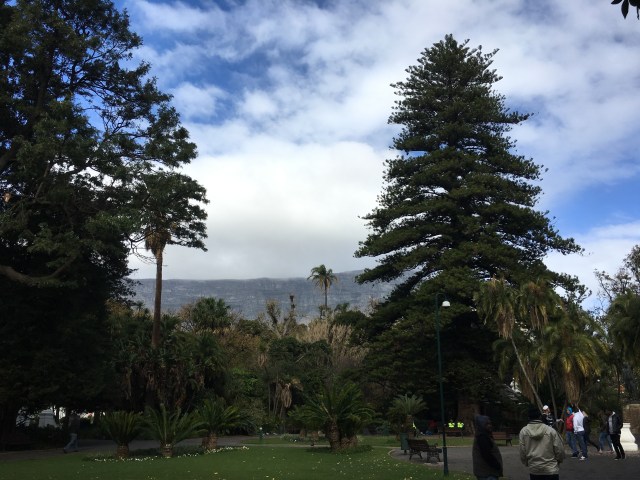
After the Castle we headed to the Company’s Garden, the large park and garden in central Cape Town.
views of Table Mountain from Company’s Garden
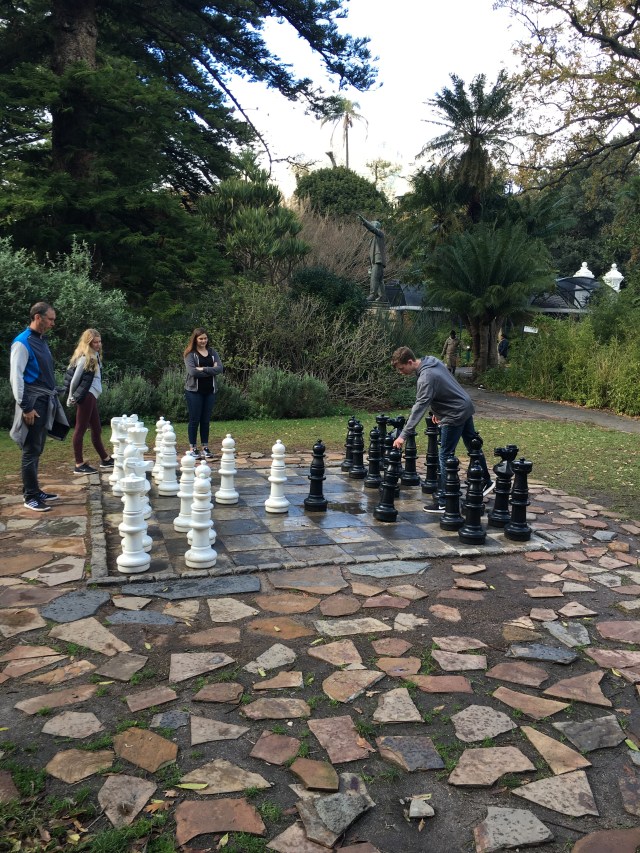
It is a large park with many attractions, including a rose garden, Japanese garden, fish pond, and aviary. Rather than a large open space there were many small areas to explore. We enjoyed the chess set that we came across.
chess set in Company’s Garden
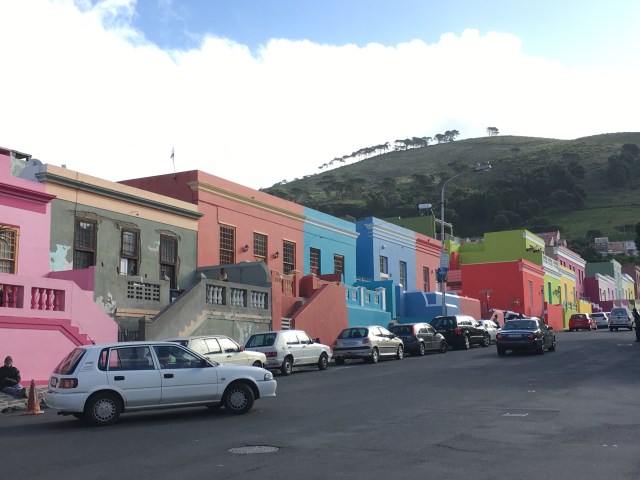
We did some shopping and had lunch nearby, and then the teenagers decided they were ready for a relaxing afternoon. We had covered a lot of ground in the last few days. So the kids headed back to the hotel while the adults did more shopping and wandering. We checked out the Bo-Kaap area which is known for its brightly painted houses.
Bo-Kaap, a primarily Muslim community
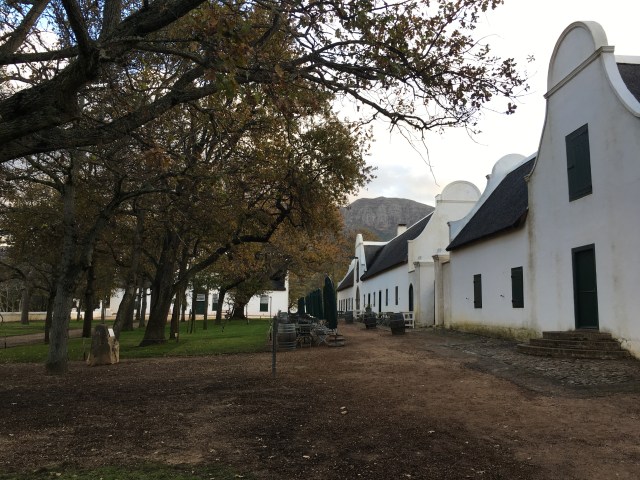
Finally, since the kids were back relaxing at the hotel, the adults decided to go wine tasting at a nearby estate. Groot Constantia is the oldest wine producing farm in South Africa. This pretty estate, about 20 minutes from central Cape Town, has been producing wine for over 300 years. We opted for the chocolate and wine pairing tasting, that includes five wines (although they gave us a try of an extra too) with a series of chocolates specially made to go with each of the wines you taste.
Groot Constantia
South Africa is known for making excellent wine. Some day I would love to get to the outlying areas like Stellenbosch and Franschhoek that are said to have excellent wine tasting routes.
We loved Cape Town. We had a variety of experiences, the area is beautiful, and the people were warm and friendly. We would be thrilled to visit again some day. I wish it were closer.
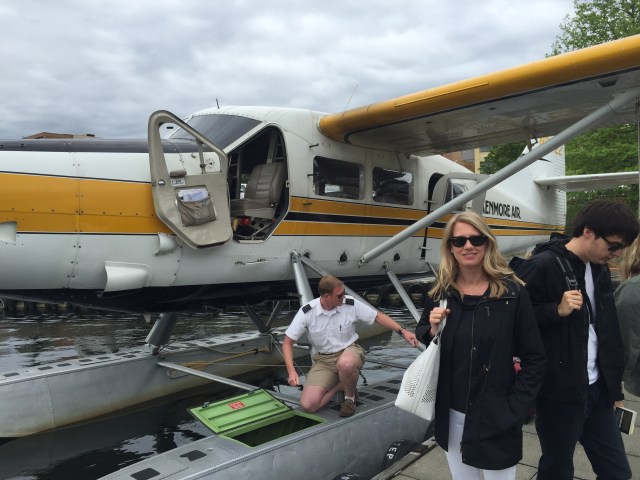
We wanted a quick getaway from Seattle so popped up to Victoria for a night. We’ve been wanting to try a seaplane for years and Kenmore Air offers a few options daily. It’s a quick 45 minute flight from Lake Union in Seattle to Victoria, and no hassle with airport security lines etc. – door to door a very quick and convenient way to go, with a sense of adventure thrown in.
our pilot loading the luggage
The flight between Seattle and Victoria Harbour is gorgeous with spectacular views of Puget Sound and the San Juan Islands.
Kenmore Air lands right in Victoria Harbour, and you can walk or taxi to lodging from there. In addition to the traditional taxi cabs, you can also take a water taxi. The taxis stop at various locations around the harbor. The fare is $6 one way or $10 round trip. You don’t need to buy tickets in advance and can buy them from the captain on board.
water taxi
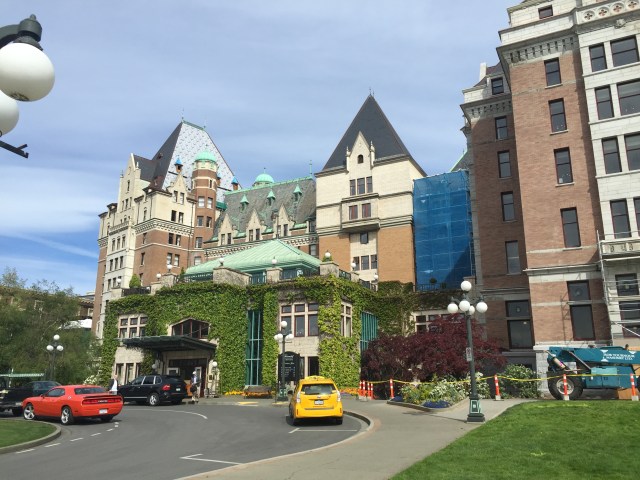
The Empress is an icon in the Victoria waterfront. But the hotel was under renovation and most of the front was covered in scaffolding. Normally this is a must-see, perhaps a stop for high tea? There’s a rose garden around the south side that is worth a look too.
the Empress hotel entrance
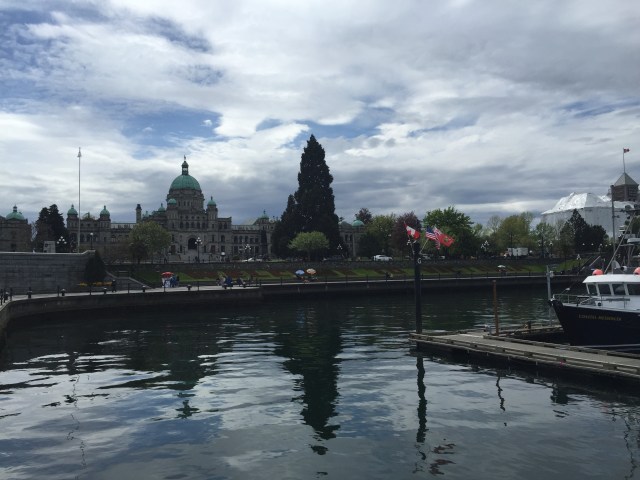
Walking past the Empress, we continued our stroll through the Inner Harbour, around the marina and past the Parliament Buildings.
Parliament building and harbour
This getaway was all about relaxation for us, so after our walk we headed back to the hotel for a massage and a cocktail overlooking the water.
That evening on our walk back to the hotel after dinner, we were treated to a gorgeous sunset.
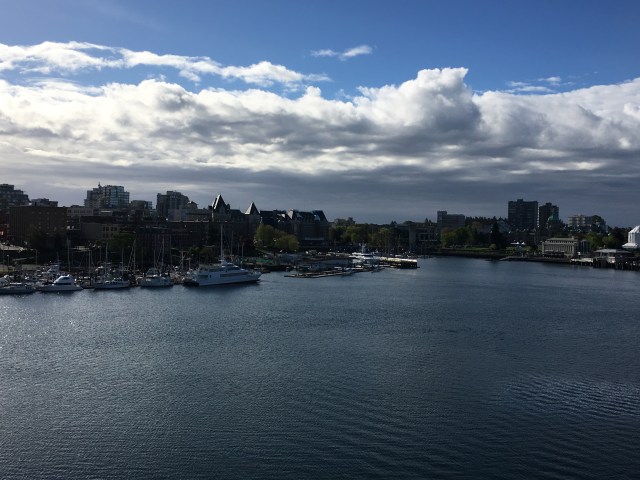
We woke up the next morning to great views of the harbor and the sun shining. (What, you see clouds? I’m from Seattle – I see BLUE SKY!)
Victoria Harbour
An easy 10 minute walk from the Inner Harbour is Fisherman’s Wharf. (You can also take a water taxi.) There you will find colorful houseboats (most are currently lived in), some walk up food options, and a few shops and tour guides. It’s a great spot to grab some fish and chips and enjoy the surroundings.
Fisherman’s Wharf
Some popular wharf visitors hang around the docks begging for food. You can buy raw fish at The Fish Store to feed to them. Be careful, they might hypnotize you with their eyes and get you to buy more and more fish for them.
seals at Fisherman’s Wharf
This was a quick trip for us, we could have easily spent more time in Victoria. I’d love to take a floatplane again too. This itinerary I just came across from Kenmore Air sounds fun. Maybe next time!
The trip got off to an annoying start when some of my jewelry was stolen out of my suitcase. This was a first for me. The silver jewelry was dumped in my bag while the gold jewelry was taken, most likely by baggage handlers in Cancun. Fortunately nothing that was taken was expensive or unreplaceable (I know better than to take that with me), and the airline paid to replace them, but irritating none the less. Some lady in Mexico probably has a $30 necklace with my kids’ initials on it now. Lesson learned – do not pack jewelry in a side pocket. Too easy for someone to quickly reach in and grab. And even inexpensive jewelry may best be kept in your carry on, because thieves will be working quickly and not take time to care if something is valuable or not.
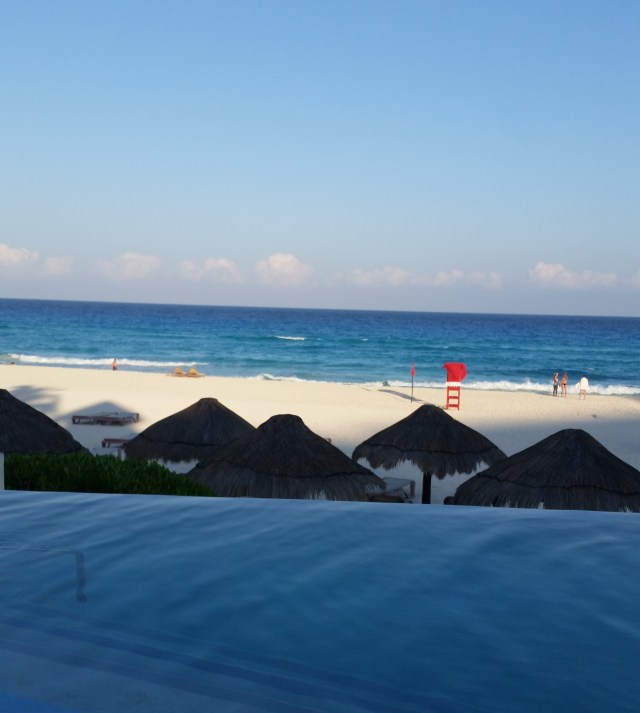
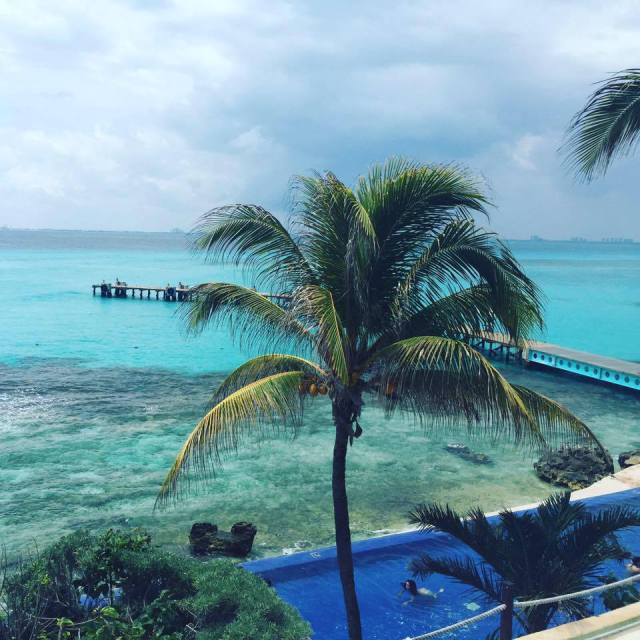
Once we got our swimsuits on and headed for the beach I quickly moved past the “jewelry incident”. I love the white sand and warm blue water in Cancun. Heavenly!
view from the hotel infinity pool
Cancun is a destination where you can do as much or as little as you like. You can lay on the beach with a book or head off on a day trip to hike Mayan ruins. For this trip with the teens we wanted a combination of pool/beach time and a couple outings.
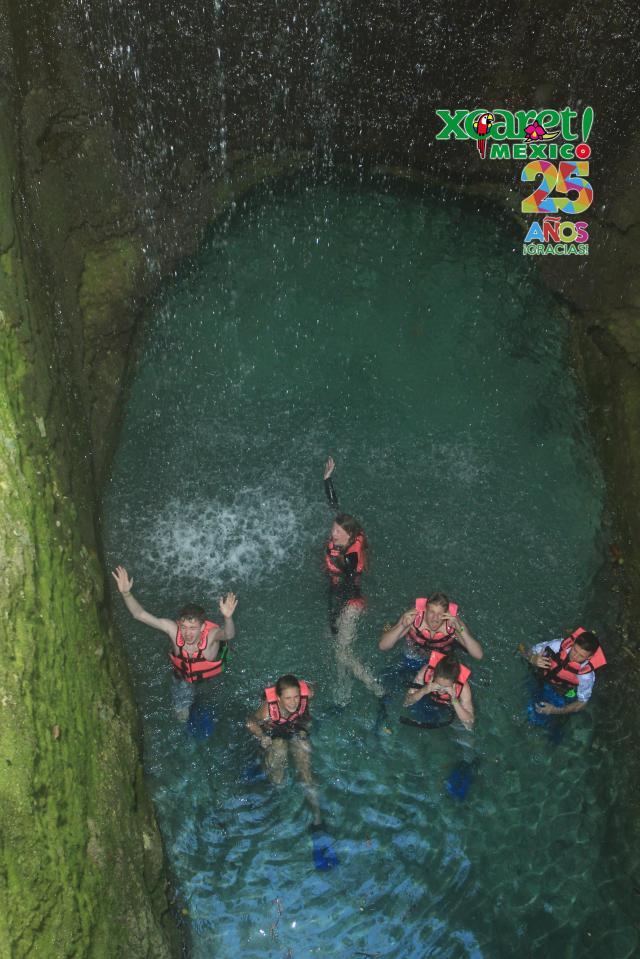
Our first day trip was to Xcaret an”eco-archaelogical park” about an hour away from Cancun. You can swim through the underground rivers, check out the animals, sit on the beach, and watch entertainment.
Xcaret underground cave
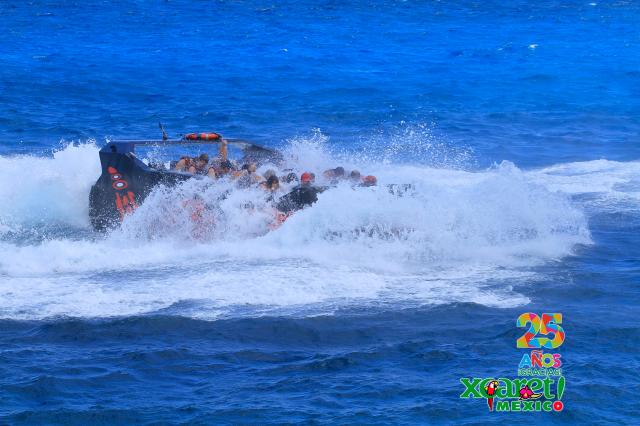
There are also many optional activities that you can pay extra to do – swim with dolphins, sharks, or stingrays, snorkel, snuba, etc. We did several and had a lot of fun, but our day was busy and we didn’t have as much time as we would have liked in the underground rivers. The speed boat ride on the ocean (“Adrenalina”) was crazy! Waves of water slammed over us during the ride. Adventure seekers will love it. (Me? Not so much.)
Adrenalina going under a wave of water
Just after the “immersion” – everyone trying to get saltwater out of their eyes
Everybody in our group had a blast at Xcaret and would happily go there again.
Later in the week we spent a day on Isla Mujeres, an island 8 miles from Cancun. It’s a great place to spend the day if you want to get out of Cancun and have a more small town feel. Ferries from Cancun run every hour, and the ride takes about 20 minutes.
ferry to Isla Mujeres
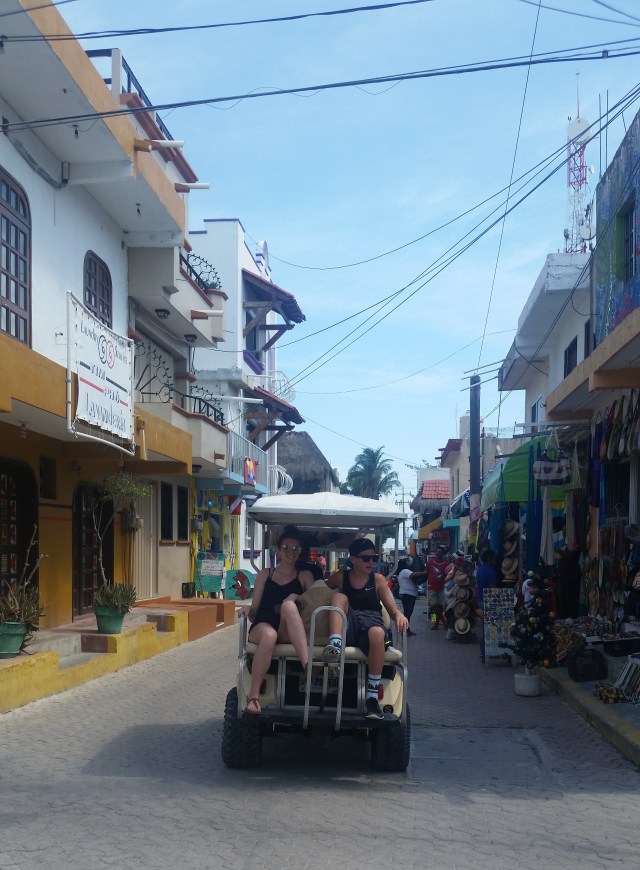
Golf carts are a fun and convenient way to get around the island, which is only 5 miles long. There are several rental locations right when you get off the ferry.
Riding a golf cart through downtown Isla Mujeres
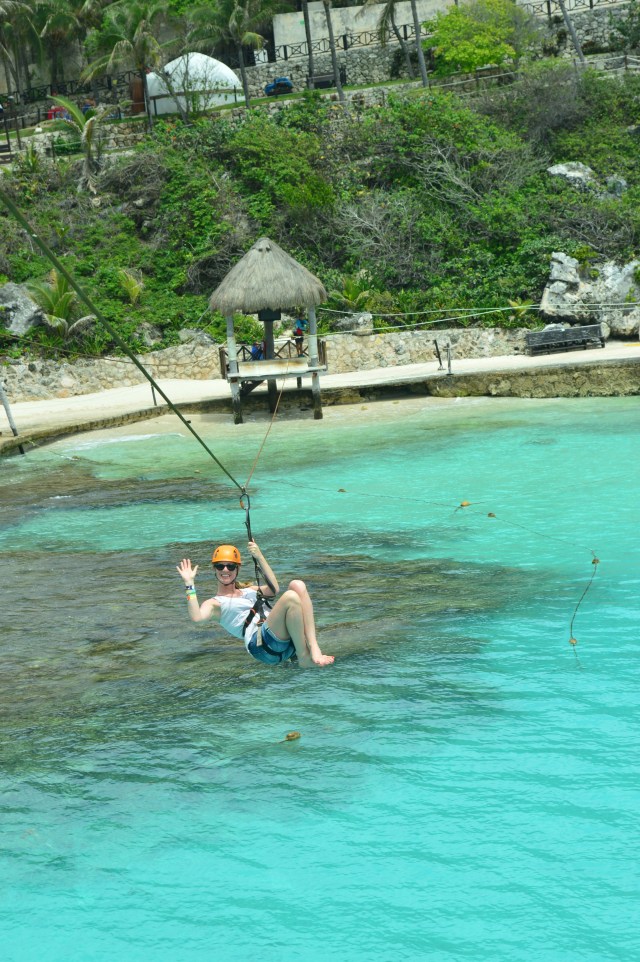
We spent most of our day on Isla Mujeres at Garrafon, a beach park on the southern tip. You pay an entrance fee that includes food, drink, and locker and also some of the activities such as kayaking and snorkeling. We opted for the package that included the zip-line.
Garrafon pool and reef
Garrafon zip-line over the ocean
After several hours at Garrafon, we explored the island in our golf carts. We checked out some of the shops in downtown Isla Mujeres before catching the ferry back to Cancun.
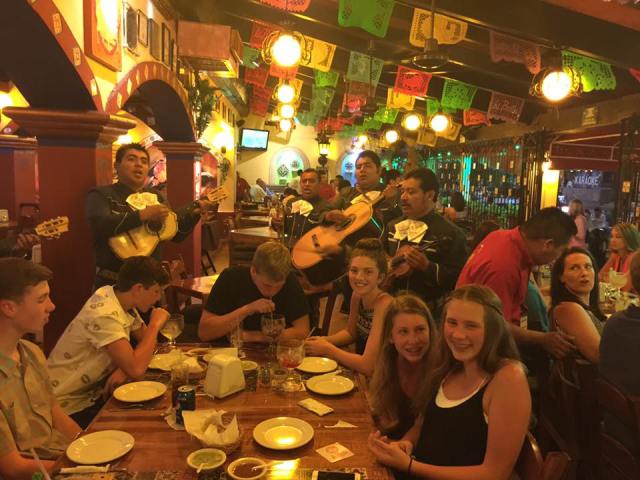
I do recommend getting out of the Cancun hotel zone and heading into downtown Cancun for at least one dinner. The hotel zone has a lot of American chains and you will find some fun Mexican restaurants downtown. You can’t leave Mexico without hearing a mariachi band. 😉
downtown Cancun
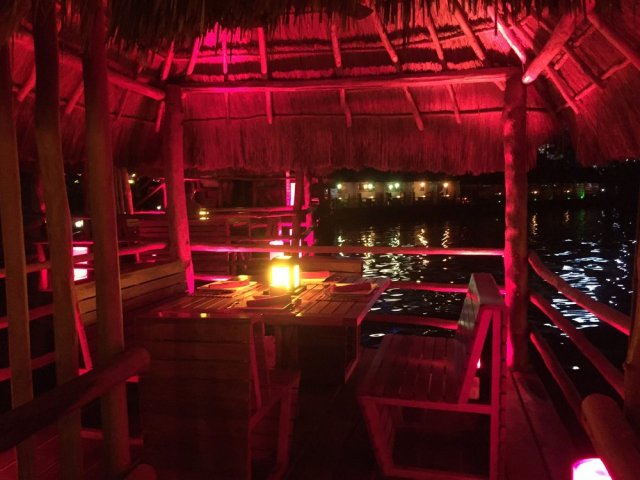
There was one restaurant we ate at in the hotel zone that stood out to me. Thai is a Thai restaurant (go figure) in La Isla Shopping Mall. The food was good and we loved the overwater bungalows for each table. This was a fun adult night out (the kids opted to eat at Johnny Rockets).
Thai
I would still like to make it to the Mayan ruins some day. But for this trip with the kids and some of our friends, Cancun was the perfect blend of adventure and relaxation.
Florence is a charming city filled with art and history, and of course delicious food. While there are plenty of beautiful and interesting things to see in Florence, it also makes a great home base for visiting other parts of Tuscany.
After settling into our hotel, we visited the Accademia to see David. Even on a Sunday evening in March the line to enter the museum was long, so we were glad we had booked tickets in advance. Every time I see David I am in awe of the intricacy and detail of the carving on such a grand scale.
David
After wandering the historic streets of the city center, we capped off our first afternoon with a sunset drink at our hotel’s rooftop bar.
view across the Arno River
The next day was a Monday, the day of the week that the major museums in Florence are closed. So we took a Vespa wine tasting tour. Don’t worry, the wine tasting is done after you’re done riding the Vespa! This was probably my favorite day of the trip. We rode Vespas in the hills around the city, and finished with wine tasting at a 15th century villa. It wasn’t hard to learn to ride the Vespa and I felt like a local zipping along the roads (yes, with some cars honking and passing me). We enjoyed chatting with the other travelers in the group while tasting the house made wines after our ride.
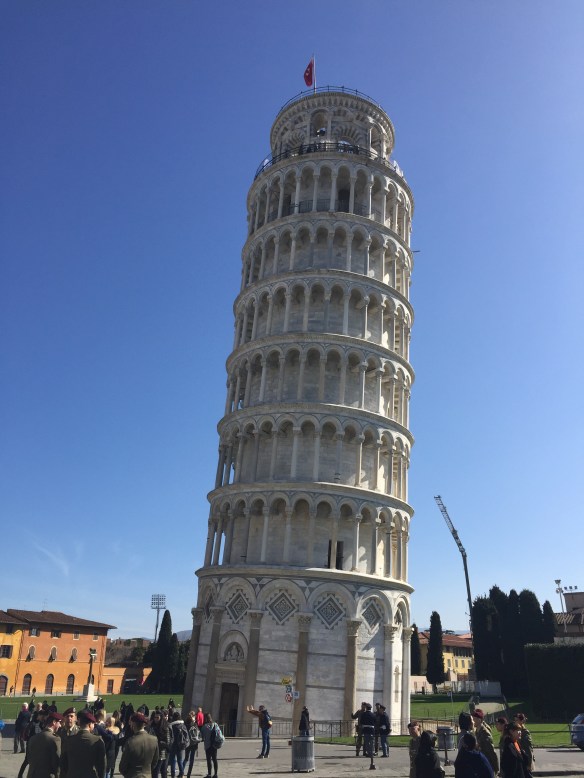
The following day we hired a driver and took a day trip to Cinque Terre. On the way there, we made a stop at Pisa. Yes, we took the obligatory “holding up the tower” photo which I’m sparing you here. (But if you look closely you’ll see someone else doing it – the tower is surrounded by tourists in this pose.)
Pisa
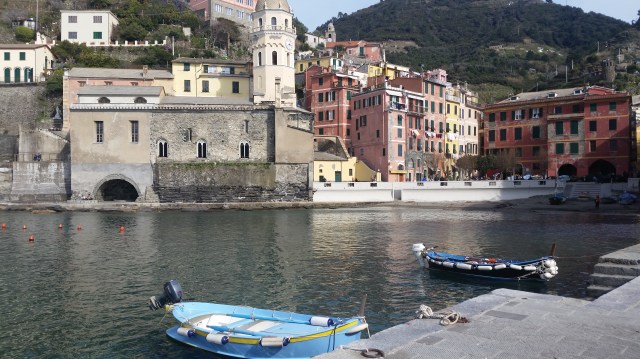
After our brief stop in Pisa, we drove to the five coastal villages that make up the Cinque Terre. Being March, boat service between the villages was not running yet. So we drove through Riomaggiore, hiked from Manarola to Corniglia, drove to Vernazza (where we ate lunch), and then took the train to Monterosso. The villages were quiet because of the season, and we found each to be charming in their own way.
Vernazza
On the way back to Florence we stopped by Lucca, known for its intact Renaissance walls surrounding the city. We rented bikes and did a loop around the city on the wall. We didn’t spend a lot of time here, just a short visit on our way back to Florence.
Lucca
The next day we did another day trip, this time heading south to Siena. We started our tour of Siena with the stunning Duomo, a 13th century Gothic cathedral.
Duomo
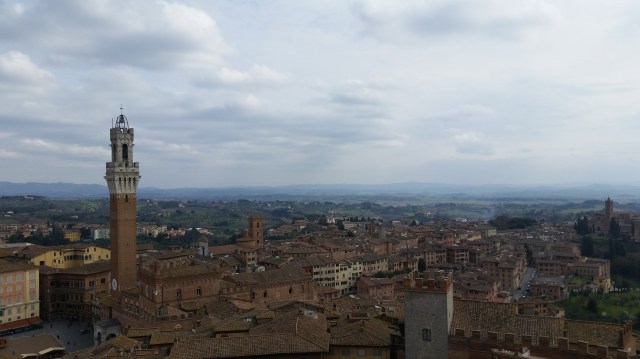
We climbed the 400 steps to the top of the City Tower and were rewarded with magnificent views of the city. I would love to visit Siena in the summer when they host the famous horse race in the square.
View of Siena from the top of the tower
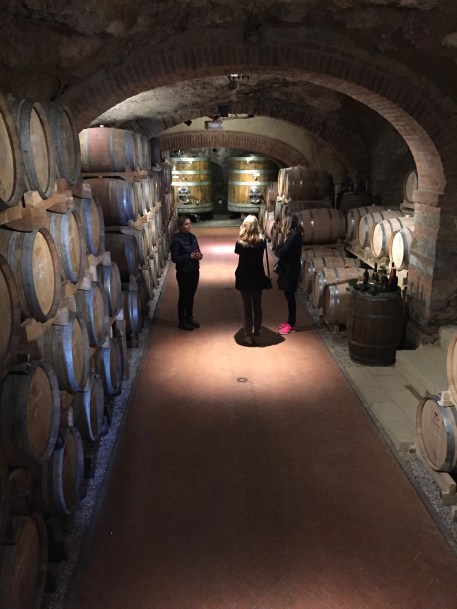
After a few hours wandering Siena, we drove to a small family winery in the Tuscan countryside for lunch. We had a delicious meal with some very good wines.
wine cellar tour
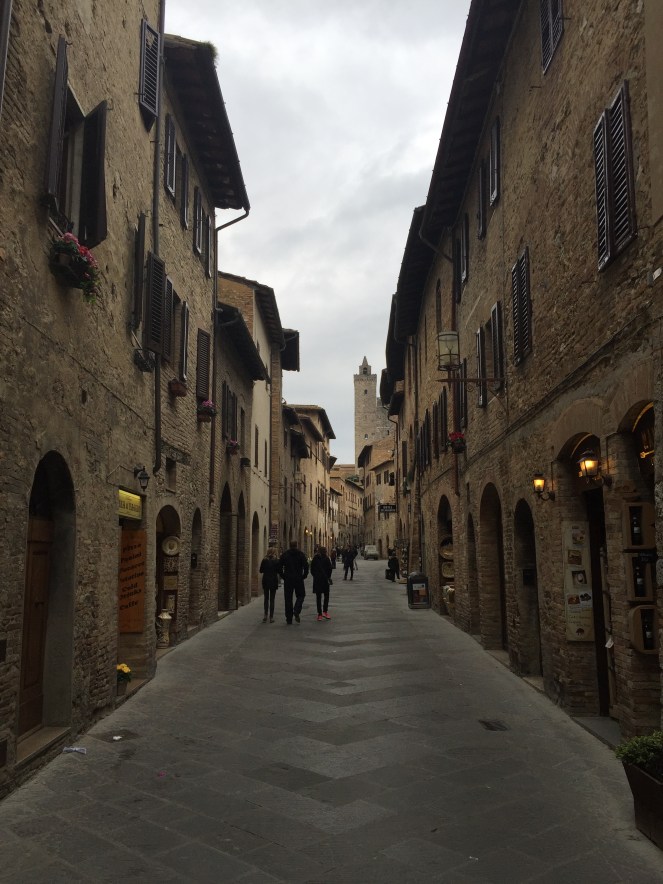
Our final stop for the day was San Gimignano, a town known for its medieval towers. Video gamers will know it as the setting for Assassins Creed. On a whim we checked out the Museum of Torture – very creepy and not for the faint of heart, but entertaining none the less. It was rainy and quiet while we were there. For the most part we just wandered the streets, stopping in to an occasional shop here and there.
San Gimignano
Florence is known for its steak. We were told by a local that a good bistecca alla florentina should be at least 3 fingers thick. The best we had was at Del Fagioli, a restaurant recommended by one of our day trip drivers. This was our favorite meal in Florence – a cozy neighborhood feel with excellent service and food. They bring out a huge plate of meat and have the diner choose their steak before it is cooked. (No, vegetarians would probably not enjoy this.)
Choose your steak
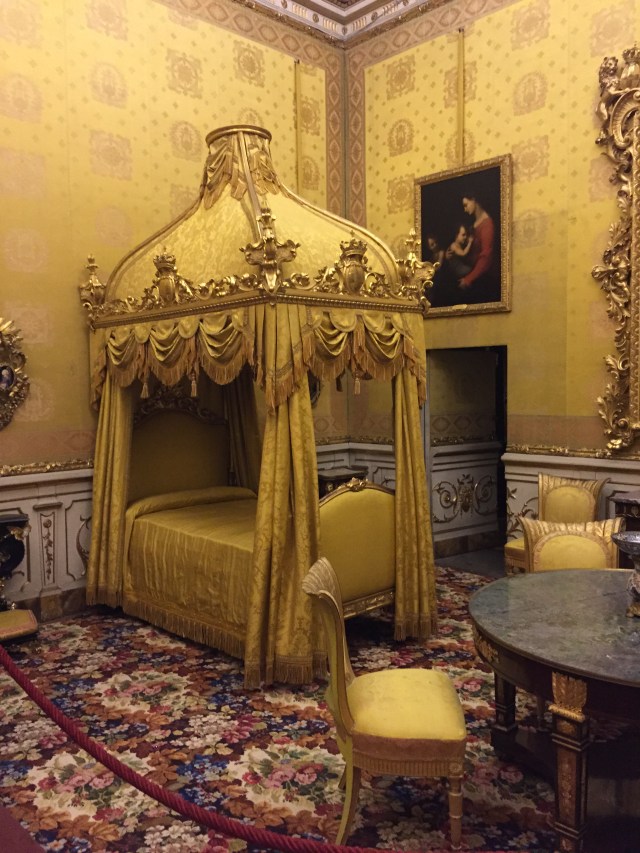
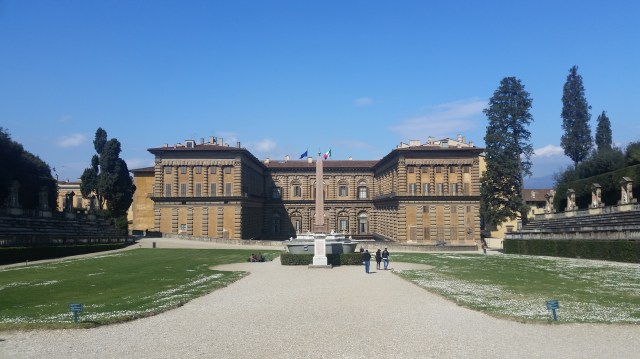
The last day of our trip we spent in Florence, exploring the city. We started with the Pitti Palace, which was a residence of the Medici family.
Pitti Palace Royal Apartments
It was a nice sunny day so we wandered around the Pitti Palace gardens after we were finished in the Palace museums.
view of the palace from the gardens behind
From there we walked across the Ponte Vecchio, but didn’t spend much time in the shops which we had been told are overpriced.
Ponte Vecchio – crowded and touristy even in winter
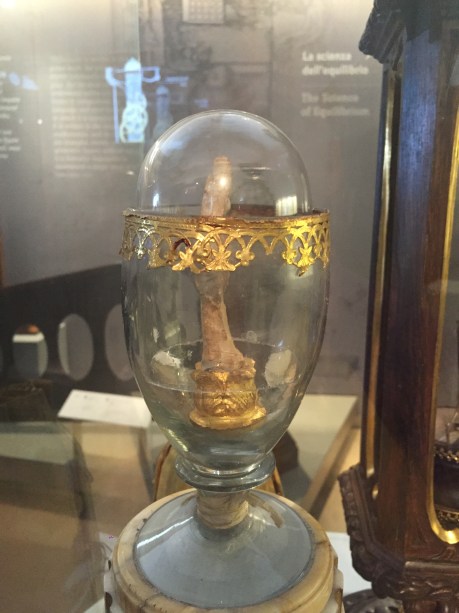
My husband really wanted to visit the Galileo Science Museum, something we hadn’t made it to in the past. This was really interesting, with scientific tools and contraptions from 1000 to 1900 AD, like clocks, telescopes, maps, and scientific experiments. The most memorable item for me was Galileo’s middle finger, supposedly giving a message to people who don’t appreciate science.
Galileo’s middle finger
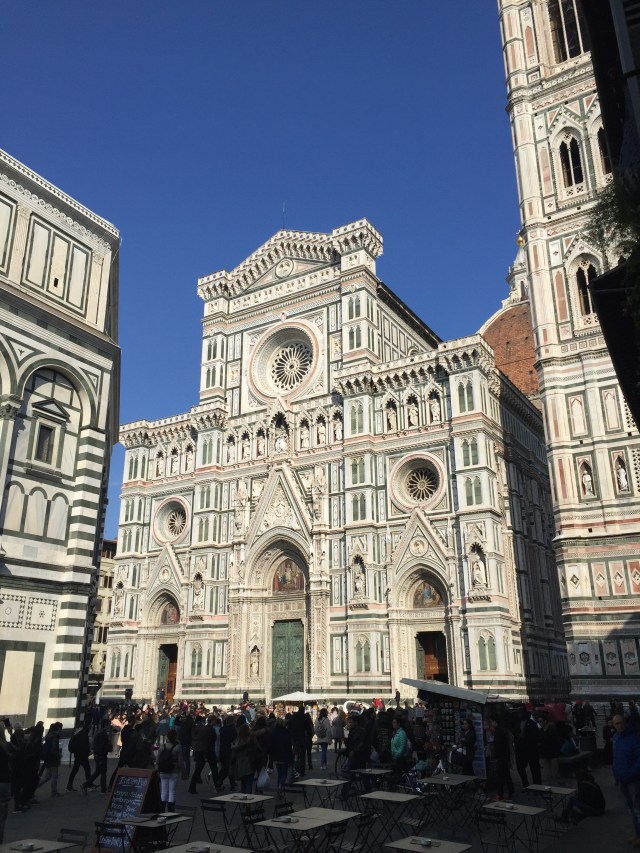
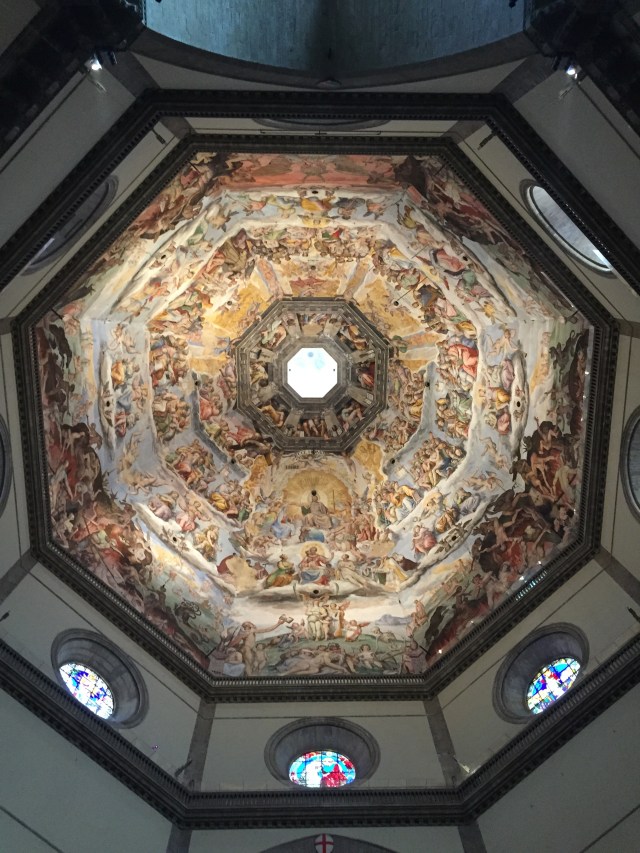
Next we visited the Duomo, Florence’s cathedral. The cathedral’s dome was the first Renaissance dome and others were later modeled after it. Inside the cathedral, the dome is ornately painted.
Duomo exteriorinside the dome of the cathedral
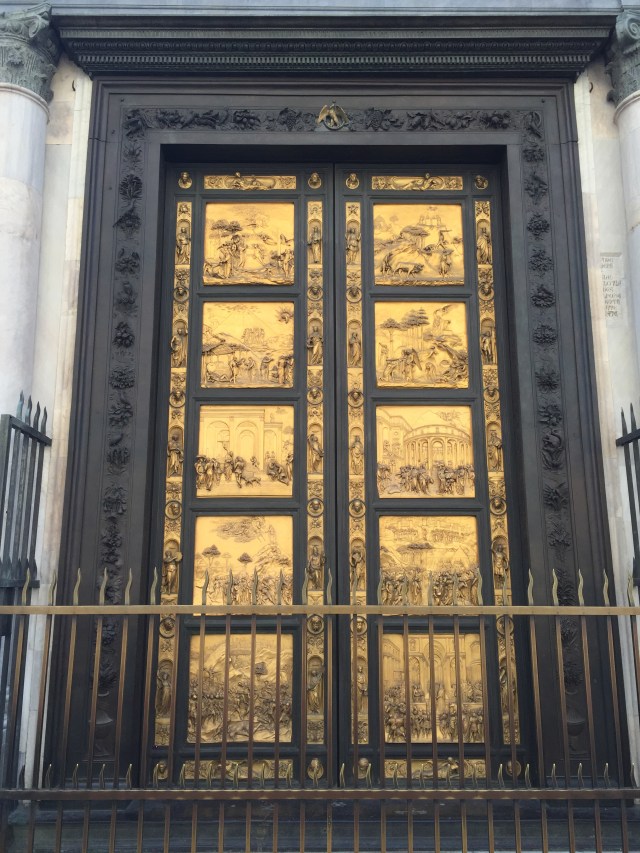
The bronze doors of the Baptistery, just across from the Duomo, are an iconic Florence sight. Michelangelo said they were fit to be the gates of paradise.
Baptistery doors
Satisfied with our sightseeing for the day we spent the rest of our last afternoon in Florence wandering, shopping for leather goods, and of course stopping for gelato.
We really enjoyed our visit to Florence, both the time we spent in the city and our day trips in surrounding Tuscany. It’s not a surprise the Florence is often voted traveler’s favorite city in Europe.
We were fortunate enough to get to spend a few days in Paris in March, this time without kids (see earlier post for trip with kids last summer). I love going back to a city for the second (or more) time; you have a feel for the city and have hit the must-see but often touristy sights, and feel more free to explore whatever sounds fun. (I know some people do that their first time to a city, but that’s not me…)
It was cold but we still had some beautiful sunny days.
My first outing was a pastry making class at L’Atelier Des Sens. It was a hands-on class and we made four different pastries. We sampled our creations and then got to take a box with us when we left. They were delicious! Who knows, maybe some day I will attempt to make them again at home.
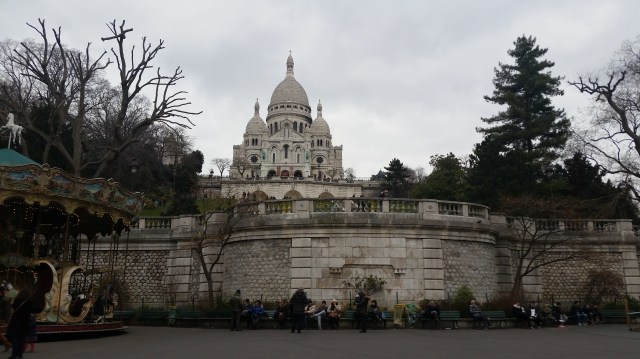
We spent the afternoon in Montmartre, a neighborhood overlooking the city. We took the funicular up the hill to the Sacré Couer and wandered through the church. There are great views of Paris from in front of the church (even better from the dome, but we did not make the climb).
Sacre Couer
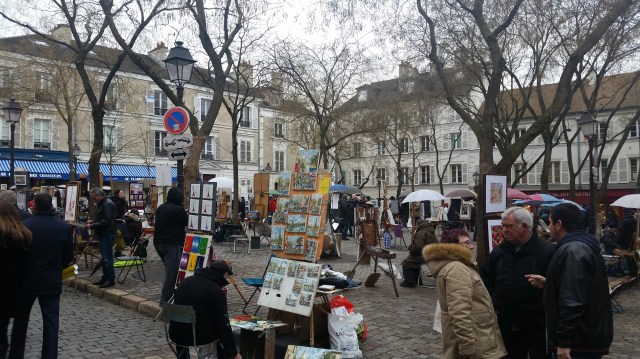
We stopped in the famous (but yes, touristy) Place du Tertre, the square where artists set up for the day and sell their work. While our friends bought some overpriced caricatures, we picked up some small sketches of Paris scenes.
Place du Tertre
Our final stop in Montmartre was the Clos Montmartre, a small vineyard tucked among the streets of Montmartre, which is the oldest working vineyard in Paris. They produce a small amount of wine per year, most of which is auctioned to support local charities. The vineyard is open to the public during their fall harvest festival and also by group tour arranged through the Montmartre tourist office. Our guide shared the history of the winery with us, and then we got to taste a recent vintage.
Clos Montmartre vineyard
The next day we took a guided tour of the Palais Garnier. Wandering through this opulent opera house you could imagine high society strutting their stuff here 100 years ago. Phantom of the Opera was set there, and we saw Box #5 which was his box in the story.
the Grand Staircase
Next we headed over to Le Marais, first for a leisurely lunch before visiting the Picasso Museum. After Picasso’s death in 1973, many of his works went to the French state, which formed a museum with the collection. The museum is housed in a 17th century hotel which has been beautifully renovated. While we were there the main exhibit focused on Picasso’s sculptures (not as many paintings).
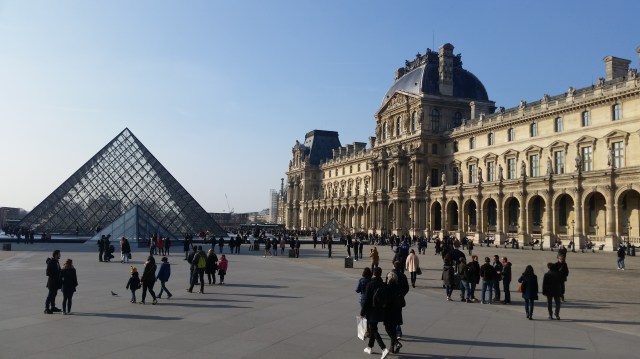
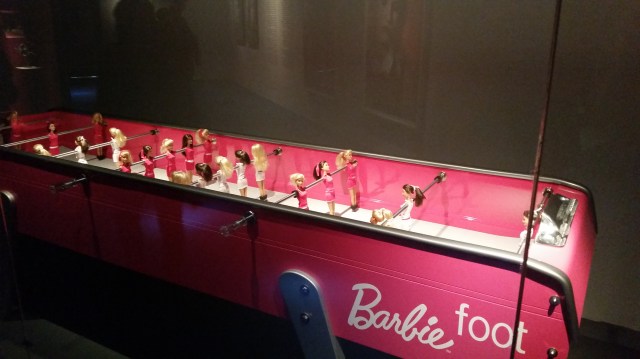
The following day started with a visit to the Musée des Arts décoratifs in a wing of the Louvre to see the special Barbie exhibit which is running from March 10 to September 18, 2016. This was so fun! To see how Barbie evolved over the years and how that reflected changes in society was interesting. There were outfits that various fashion designers (DVF, Burberry, Karl Lagerfeld, etc.) have made for Barbie, a display of Barbie’s family members (who knew Barbie had a brother named Scott??), and a wall of accessories sorted by color. If you ever loved Barbie you will love this exhibit.
Fashion designs
Wall of accessories
Barbie foosball?! I want!
Next up was a visit to the Catacombs, a place we missed on our last trip to Paris because the line was 3 hours long. This time we bought tickets in advance and bypassed the line, which was still at least an hour even on a winter day. The Catacombs are an underground burial site for over 6 million Parisians whose remains were moved there in the late 1700’s and early 1800’s when cemeteries ran out of space.
You can wander through the underground tunnels and into the galleries that house walls of stacked bones and skulls. It is chilly down there and there’s no bathroom, so be prepared.
No wine, burgers, or touching the skeletons. Got it.
I have no idea what the lower sign means. You are walking over bodies? Beware of bowling balls?
After that macabre experience we headed back into the daylight and headed to the Salon de Chocolat of Un Dimanche à Paris for some delicious hot chocolate and souvenirs for our family at home. This shop/restaurant is in the St. Germain des Pres neighborhood – we had been there on our prior trip and had to go back. I could happily sip that hot chocolate daily.
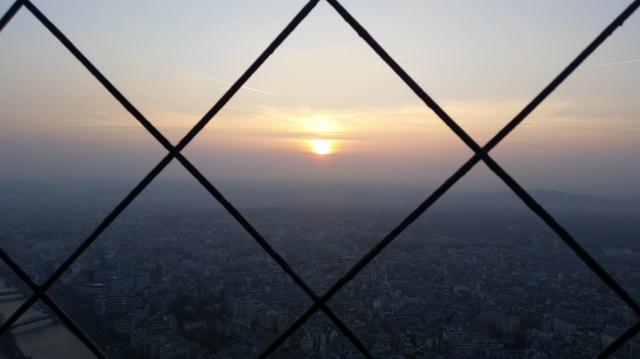
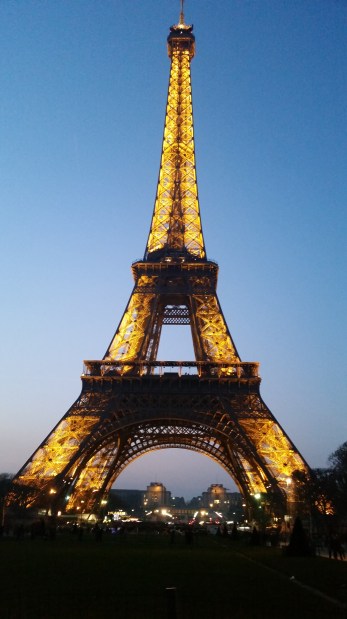
Our final night in Paris we visited the Eiffel Tower at sunset. We bought tickets in advance, and went up before it was dark and watched the sunset from the top while sipping a glass of champagne (which they sell from a counter on the top floor). This is a great time to visit because you get to see the expansive views in the light and lit up in the dark, as well as the sunset in between.
sunset from the top of the Eiffel Tower
After descending we enjoyed the tower from the ground, a golden glow in the night sky.
Once again the City of Light charmed us and we look forward to visiting her again.
Whistler is a great destination with something to appeal to everyone – both skiers and non-skiers alike. There are great restaurants and shopping, and a wide range of outdoor activities. We’ve visited with and without kids, in the winter and also in the summer, with friends and on our own. We have always enjoyed it.
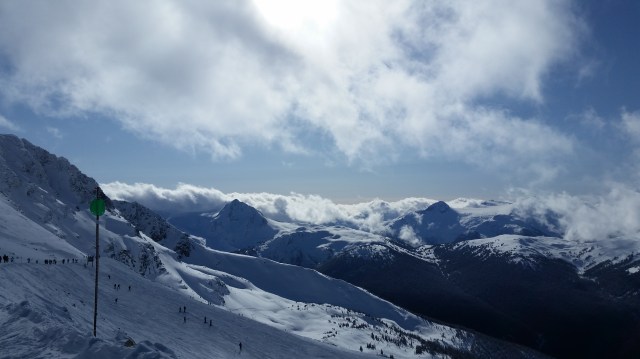
Our most recent trip was in February with the kids. Our family skis and/or snowboards, and Whistler Blackcomb has miles of runs for all ability levels with beautiful views across the valley. The Peak 2 Peak gondola makes it very easy to move back and forth between Whistler and Blackcomb.
View from Blackcomb
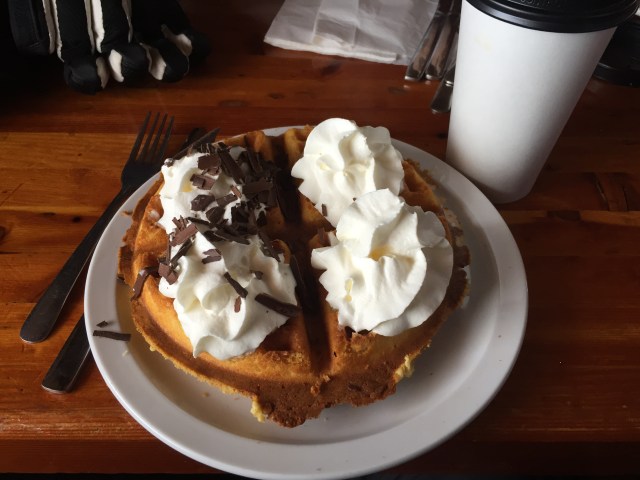
There are several on-mountain dining options, with large lodges but also some small alpine huts with tasty choices. Our favorite is the Crystal Hut on Blackcomb that serves delicious Belgian waffles. Yum!
Crystal Hut waffle – berries on one side, chocolate on the other
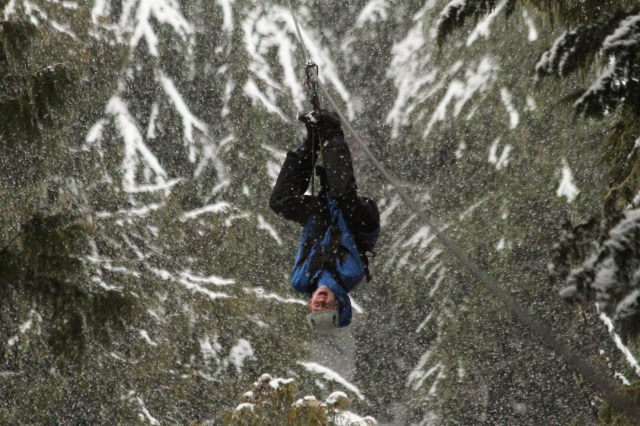
This trip we had a whole week at Whistler so wanted to try some new activities on the days we weren’t skiing. The first one we chose was zip-lining. We did the Eagle Tour with ZipTrek Eco Tours. Heights make me nervous but I still had a lot of fun. The guides were great and made us feel very safe. It was definitely a thrill!
Hanging upside down is not required 🙂
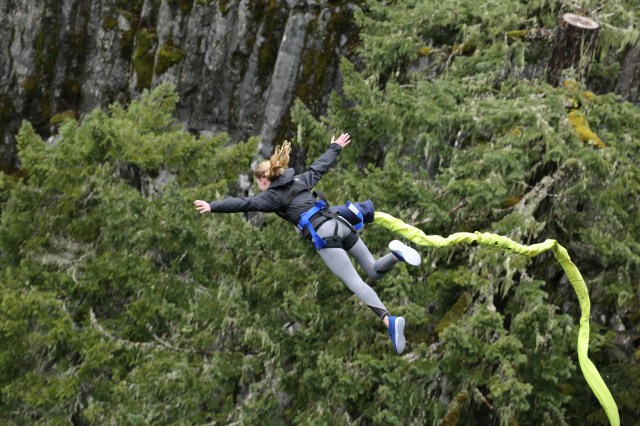
The thrill-seekers in my family wanted another adventure, so two of us (NOT me) decided to do the Whistler Bungee. You jump 160 feet over the Cheakamus River. There is no minimum age (although you need parental permission under 19) so our 12 year-old decided to take the plunge. She’s already talking about going back and doing it again (with a back-flip next time).
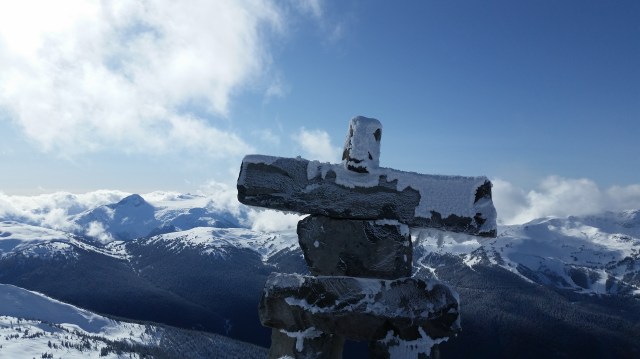
Whistler hosted the 2010 Winter Olympics which brought some fun additions to the area, including the Olympic Rings (nice photo op), the Sliding Centre (where you can try the luge, bobsleigh, or skeleton), and Inukshuk statues on both mountains.
Inukshuk on Blackcomb
The current exchange rate between the U.S. dollar and the Canadian dollar means U.S. residents can find some good deals on shopping right now. We found the best deals (when considering the conversion) were at Canadian brands (like Lululemon). It’s also nice to save on dining and lift tickets.
If you are a resident of Canada, Washington, or Oregon state, Whistler offers the EDGE Card which gives discounts on lift tickets, dining, and some activities and stores . Beyond being a money saver it’s also very convenient because you don’t have to wait in line to buy lift tickets, your card will automatically be charged when you get on the lift. The EDGE Card can also be linked to your credit card for retail purchases so that you can use it for on-mountain purchases and don’t have to bring your wallet on the slopes.
Whether you’re taking part in the on-mountain activities or sticking to the village, everyone will find something to enjoy in Whistler.




















 Kenmore Air lands right in Victoria Harbour, and you can walk or taxi to lodging from there. In addition to the traditional taxi cabs, you can also take a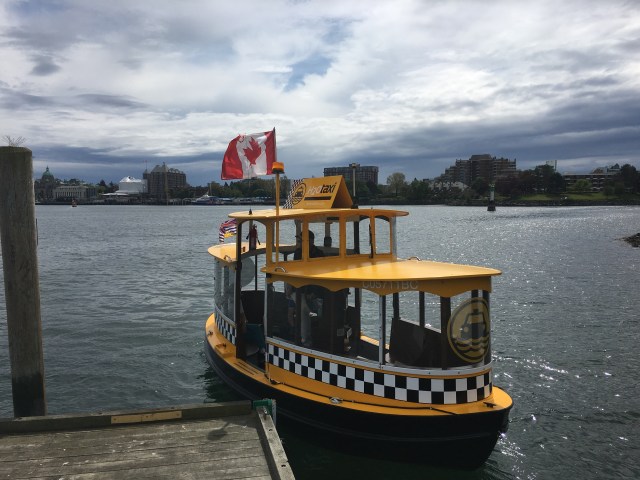

















 Trips and Tips